잡채
Japchae — Glass Noodles Stir-Fry
v1 · 전통 잡채 · The Original
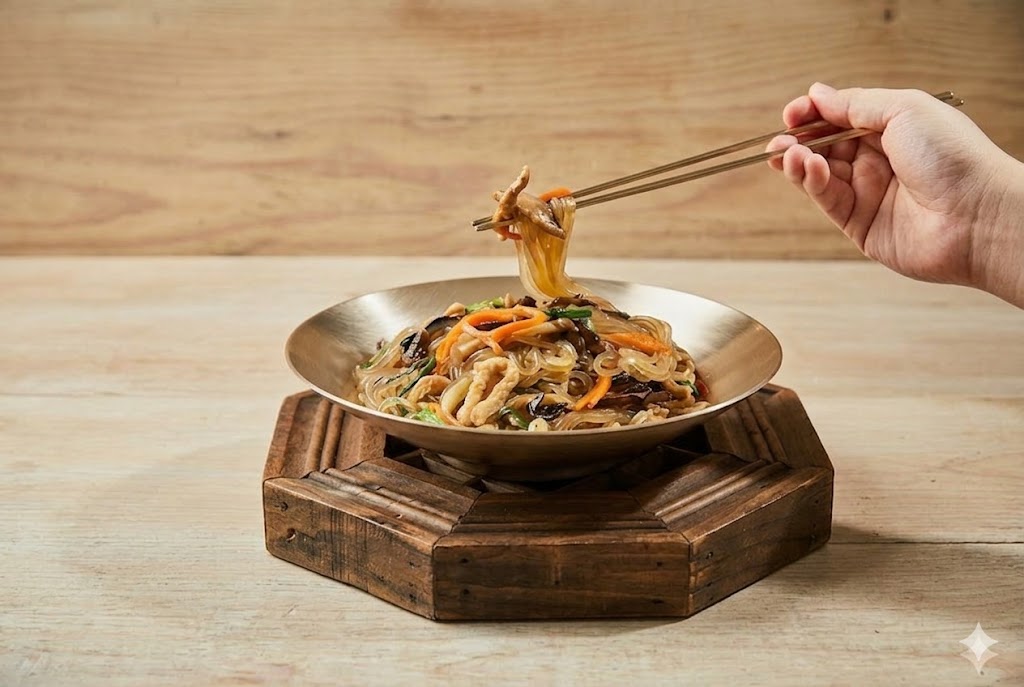
당면·시금치·당근·지단이 어우러진 잡채 — 한국의 모든 특별한 날 밥상에 오른다
"Looks like noodles. Cooks like noodles. But there's no wheat, no rice, and no gluten anywhere in sight. And somehow, it's the dish Korean dieters have been quietly obsessed with lately. — Japchae."
국수처럼 생겼는데, 국수가 아닙니다. 밀가루도 쌀도 들어가지 않습니다. 그러면서 칼로리는 낮고, 쫄깃함은 끝이 없고, 다이어터들이 최근 다시 찾기 시작했습니다. — 잡채(Japchae) 이야기입니다.
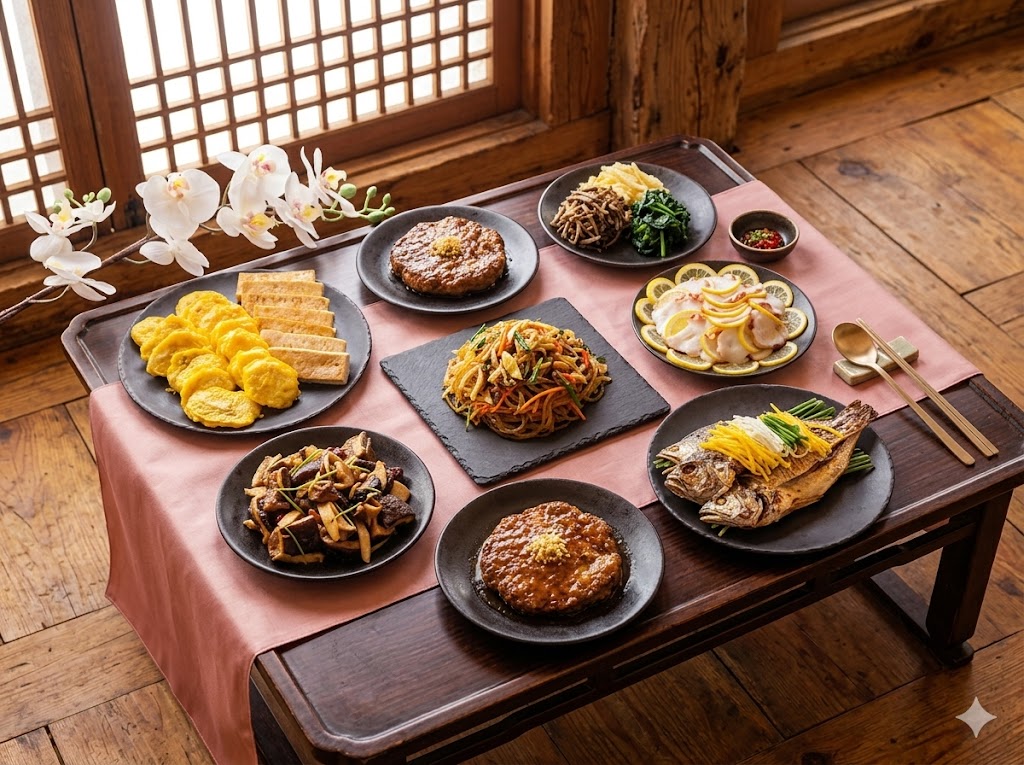
전통 소반 상차림 — 잡채의 시작
There's a name attached to japchae's origin, which is unusual for any dish. In the early 1600s, a royal official named Yi Chung prepared a stir-fried vegetable dish for King Gwanghaegun — and the king liked it so much he reportedly wouldn't pick up his chopsticks until Yi's food arrived at the table. The reward: a promotion. The gossip: people started calling him the "Japchae Minister" behind his back. It's in the royal annals. It actually happened.
Here's what most people miss: that original japchae had no noodles. It was a careful arrangement of seasonal vegetables — bellflower root, bean sprouts, water parsley, wild mushrooms, pheasant — all sliced thin and stir-fried. The name says it plainly: jap (잡) means "mixed," chae (채) means "vegetables." Glass noodles didn't enter the picture until a noodle factory opened in 1919, and the dish we recognize today only became standard after the 1930s. Which means the iconic chewy-noodle japchae you know is barely a century old.
잡채를 만든 사람이 누군지 기록으로 남아 있다. 17세기 광해군 시절, 이충이라는 신하가 궁중에 올린 채소 볶음이 그 시작이었다. 임금이 어찌나 좋아했는지, 밥상을 받기 전에 이충네 음식이 올 때까지 수저를 들지 않았다는 기록이 조선왕조실록에 실려 있다. 그 결과 이충은 높은 벼슬까지 얻었고, 사람들은 뒤에서 그를 "잡채 판서"라고 불렀다.
그런데 그 잡채에는 당면이 없었다. 도라지, 숙주, 미나리, 석이버섯, 꿩고기— 제철 채소와 귀한 재료를 잘게 썰어 볶은 것이 원형이었다. '잡(雜)'은 섞는다는 뜻, '채(菜)'는 채소. 지금 잡채의 주인공인 당면이 한국에 들어온 건 1919년, 황해도 사리원에 당면공장이 처음 생기면서부터다. 300년 역사의 잡채에서 당면의 역사는 고작 100년이다.
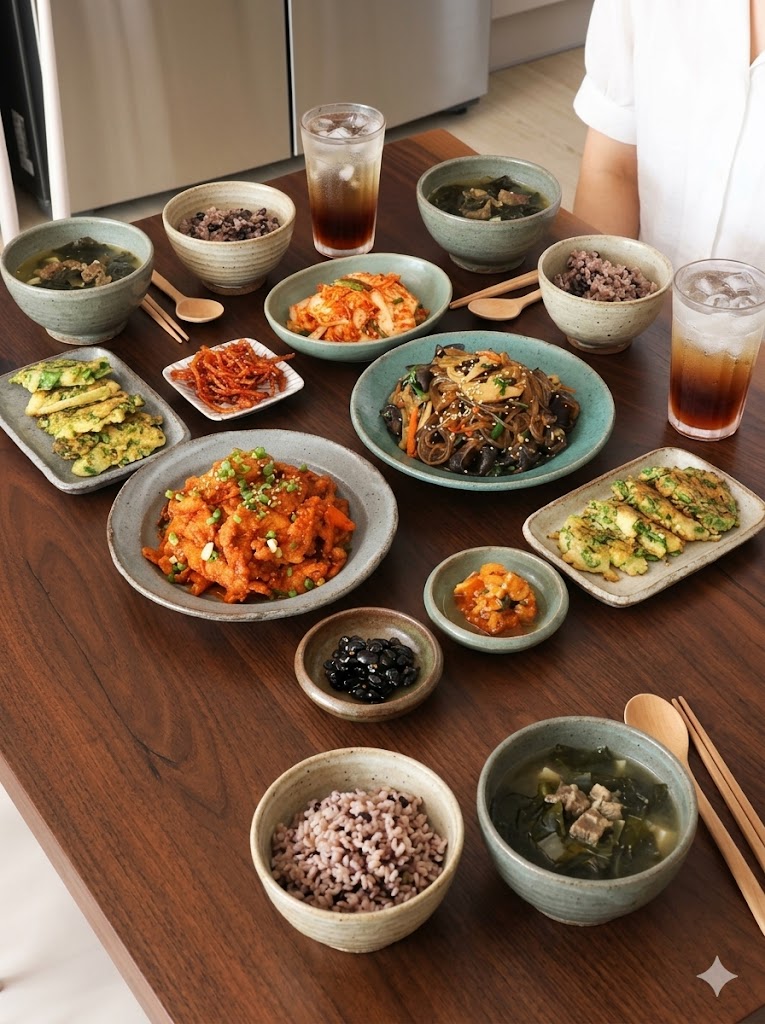
"The dish that shows up every time something matters."
Ask any Korean what japchae means, and the answer is usually simpler than food science: it's the dish their mom woke up early to make. At every major life milestone — a first birthday, a 60th, a holiday table, a memorial — japchae shows up. The long noodles symbolize longevity. The colorful vegetables represent abundance. Cutting the noodles short is quietly considered bad luck. The food carries the wish.
돌잔치, 환갑, 명절, 제삿날— 한국의 모든 특별한 날에는 잡채가 있다. 긴 면발이 장수를, 형형색색의 채소가 풍요를 상징한다. 엄마가 아침 일찍 일어나 채소를 하나씩 따로 볶아 만들어 낸 잡채. 그게 잡채가 가진 진짜 힘이다.
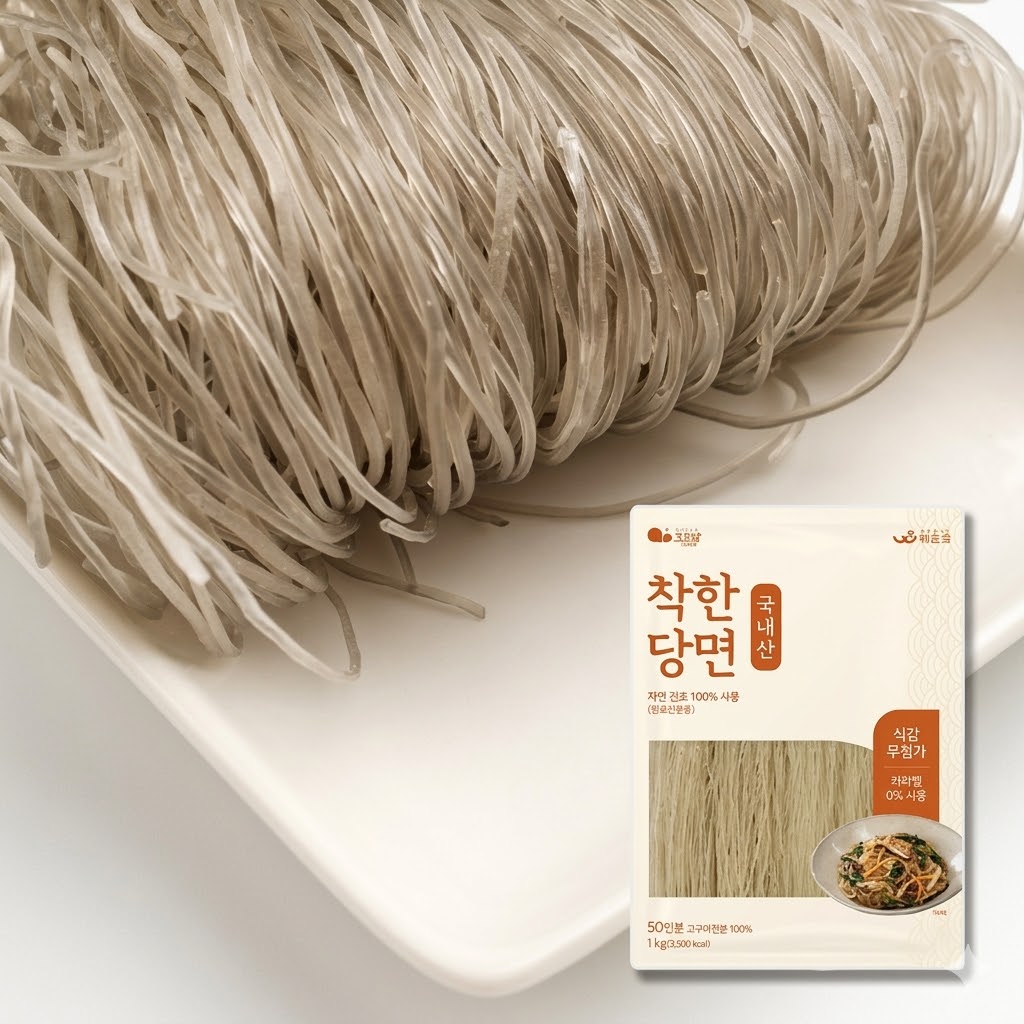 당면
당면
 따로 볶기
따로 볶기
 장수의 면발
왼쪽부터: 건당면 · 재료 따로 볶기 · 젓가락으로 들어올리는 잡채
Not Your Average Noodle
Dangmyeon is made from sweet potato starch — no wheat, no rice, no gluten. Its glycemic index of 28 is roughly half that of wheat noodles (65–70). For a chewy, satisfying noodle that doesn't spike blood sugar, it's quietly one of the better options.
당면의 원료는 고구마 전분이다. 밀가루도 쌀도 없다. 혈당지수 28— 밀국수(65~70)의 절반도 안 된다. 쫄깃하게 먹을 수 있는 저GI 식품이라는 것, 잘 모르는 사람이 많다.
One Dish, One Promotion
A royal official in 17th-century Korea was literally promoted because of japchae. The king loved it so much he waited for it before every meal. The official made it into the royal annals — and Koreans have been side-eyeing "japchae ministers" ever since.
잡채 하나로 판서 자리를 얻은 신하가 있었다. 조선왕조실록에 기록된 이 이야기 덕분에 "잡채 판서"라는 말은 역사에 남았고, 음식으로 출세했다는 비아냥의 시초가 됐다.
Every Color, Cooked Alone
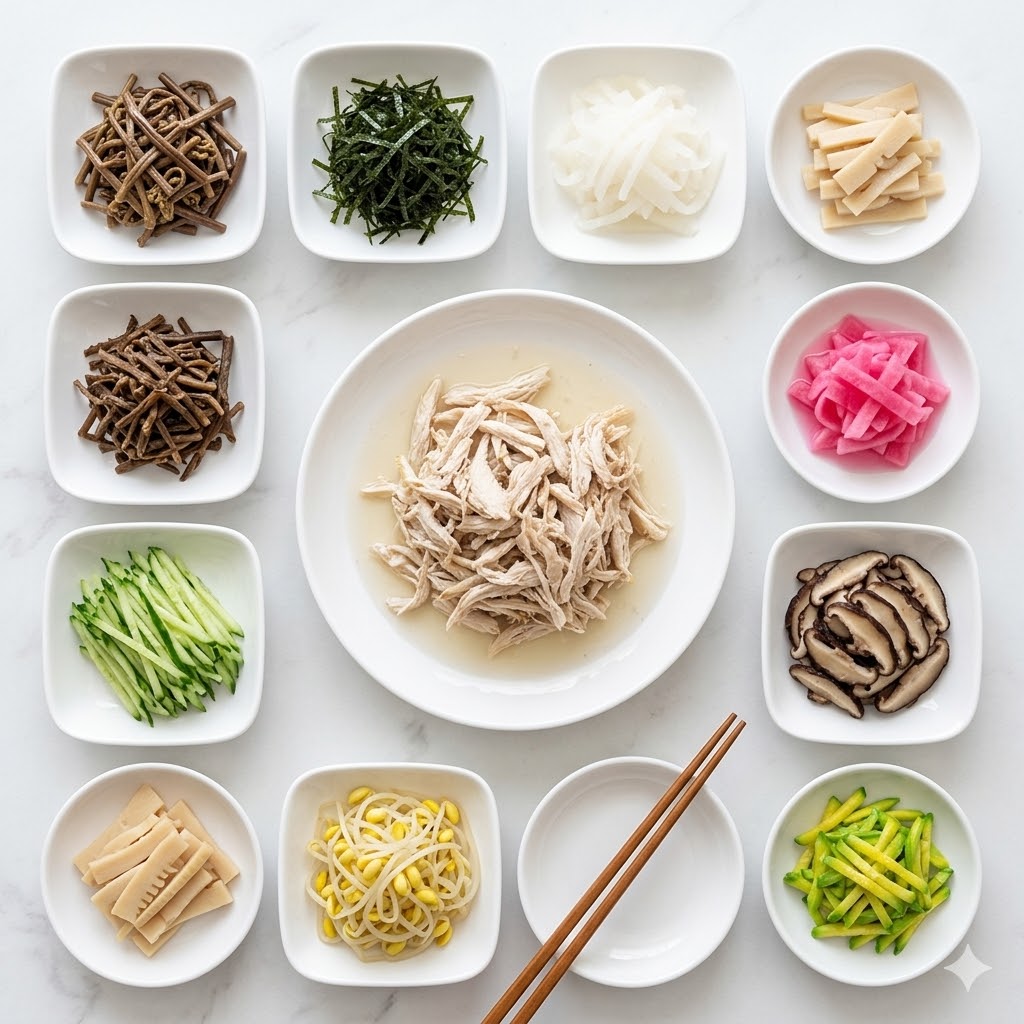
Every component — beef, spinach, carrot, onion, shiitake, egg — is cooked separately before being combined. Different cooking times, yes, but also intention. Each color represents something: green for vitality, orange for abundance, yellow for joy.
재료는 반드시 따로 볶는다. 소고기, 시금치, 당근, 양파, 표고버섯, 달걀 지단— 각각 따로 볶고 따로 간을 해야 색이 살고 맛이 산다. 이 손품이 잡채를 "특별한 날 음식"으로 만드는 이유다.
The Long Noodle Rule
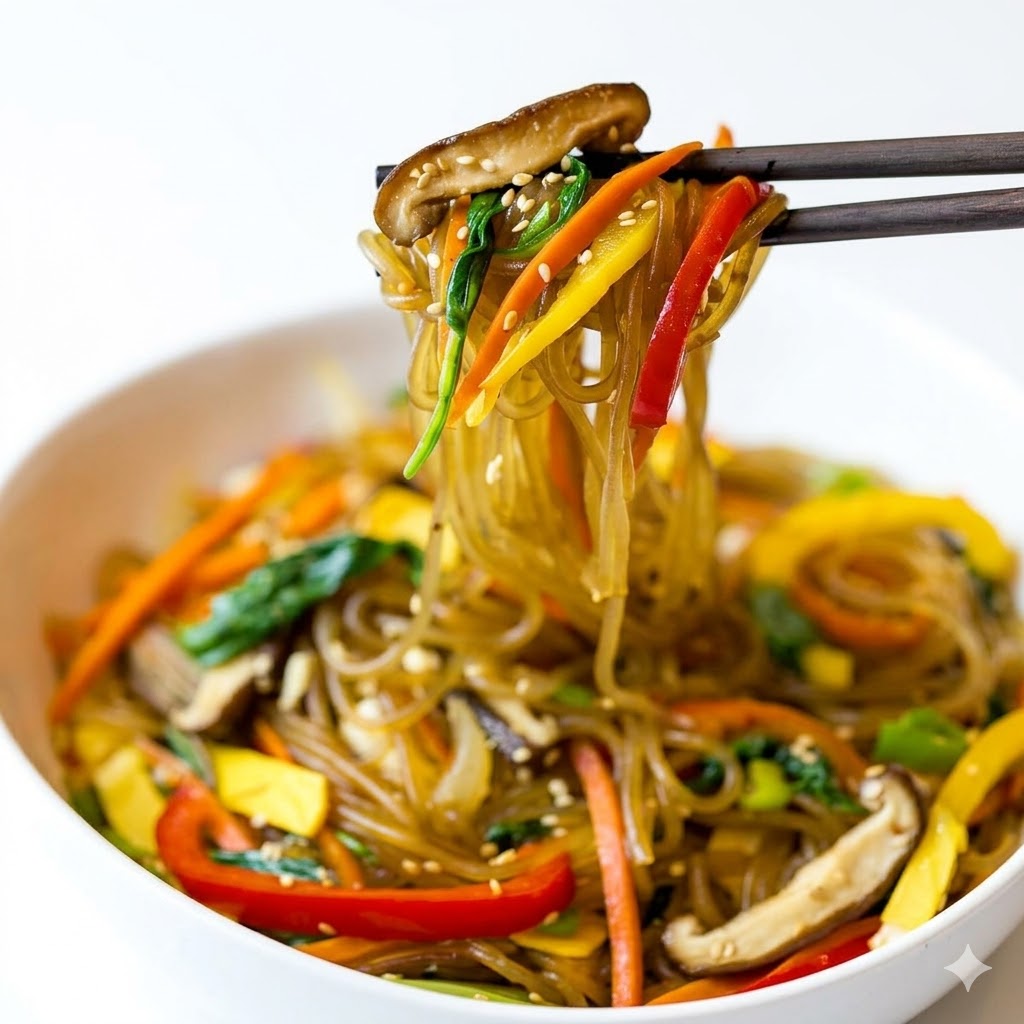
Long noodles mean long life in Korean food culture — and you don't cut them if you can help it. Serving japchae at a birthday with chopped-up noodles is a quiet way to start a family argument. The wish is in the length.
한국에서 긴 면은 장수의 상징이다. 잡채도 마찬가지. 생일날 당면을 짧게 끊어 내면 집에서 한 소리 듣는다. 면의 길이가 곧 바람이다.
① 직접 만들기 — How to Make
진짜 잡채는 손이 많이 간다. 소고기·시금치·당근·양파·표고버섯·달걀— 이 여섯 가지를 각각 따로 볶고 따로 간을 해야 한다. 한 번에 다 넣으면 색이 섞이고 결국 죽이 된다. 귀찮아도 이 한 단계가 집에서 만든 잡채와 "엄마 잡채"의 차이를 만든다.
재료 (Ingredients)
소스 (당면 + 고기 공용)
간장 3큰술 · 설탕 1.5큰술 · 참기름 1큰술 · 다진 마늘 1작은술
Soy sauce 3 tbsp · Sugar 1.5 tbsp · Sesame oil 1 tbsp · Minced garlic 1 tsp
당면 준비 방법 — 삶기 vs 불리기
🔥 삶기 (Boiling)
끓는 물에 9~10분 삶는다. 투명해지면 건져서 찬물에 헹군 뒤 참기름으로 버무린다. 빠르고 확실하다.
Boil in boiling water for 9–10 min until translucent. Rinse in cold water, then toss with sesame oil. Fast and foolproof.
💧 불리기 (Soaking)
따뜻한 물에 30분, 또는 찬물에 하룻밤 담가둔다. 팬에서 소스와 함께 직접 볶아 익힌다. 식감 조절이 유리하다.
Soak in warm water for 30 min, or cold water overnight. Stir-fry directly in the pan with sauce. Better control over final texture.
⚠️ 찌개용 당면은 반드시 불리기만 — 삶은 당면을 넣으면 국물을 다 흡수해버린다.
For stew (jjigae): always soak, never boil — pre-boiled noodles absorb all the broth.
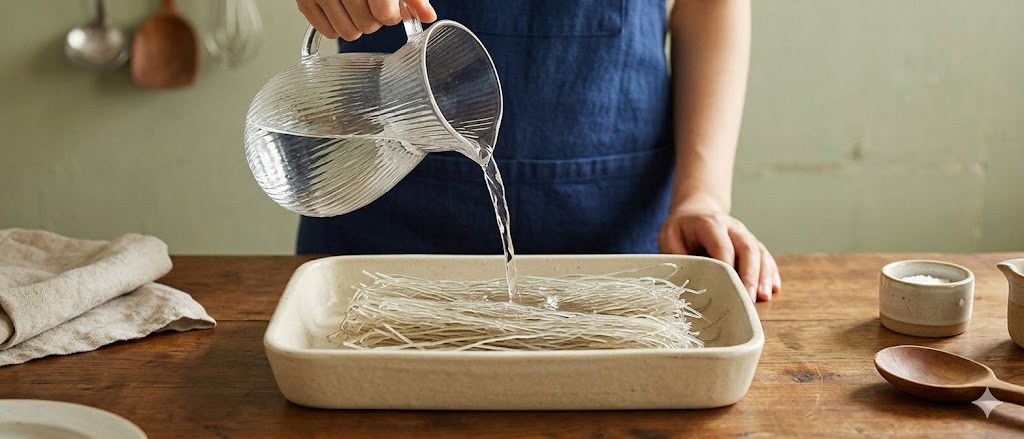
당면 불리기 — 따뜻한 물에 30분이면 충분하다
조리 순서 (Steps)
-
1
당면 준비 — 끓는 물에 9~10분 삶거나 따뜻한 물에 30분 불린다. 건져서 참기름으로 버무려 달라붙지 않게 둔다.
Cook or soak the noodles, drain, and toss with sesame oil to prevent sticking. -
2
소고기 볶기 — 소스 절반으로 고기를 10분 밑간한 뒤 센 불에 볶는다. 익으면 따로 접시에 꺼낸다.
Marinate beef in half the sauce for 10 min, stir-fry over high heat, set aside. -
3
채소는 반드시 따로 — 당근 → 양파 → 표고 순으로 각각 소금 약간과 함께 볶아 따로 둔다. 시금치는 끓는 물에 10초 데쳐 물기를 짠 뒤 간장·참기름·마늘로 무친다.
Cook each vegetable separately with a pinch of salt — carrot, onion, then shiitake. Blanch spinach 10 seconds, squeeze dry, season with soy, sesame oil, garlic. -
4
달걀 지단 — 노른자·흰자 분리해 각각 얇게 부쳐 가늘게 채 썬다. 맨 위 고명으로 쓴다.
Cook yolk and white separately into thin crepes, cut into thin strips for garnish. -
5
당면 볶기 — 팬에 나머지 소스를 넣고 당면을 2~3분 볶아 양념이 배도록 한다.
Add remaining sauce to the pan, stir-fry the noodles for 2–3 min until evenly coated. -
6
합치기 — 큰 볼에 모든 재료를 넣고 참기름을 한 번 더 둘러 가볍게 버무린다. 지단은 맨 위에 올린다.
Combine everything in a large bowl, drizzle with sesame oil, toss gently. Top with egg strips.
이것만 알면 됩니다 / The One Rule
Don't cook everything together. Each ingredient has a different cooking time, and cooking them separately is what keeps the colors vivid and the textures distinct. It's the extra step that separates homemade japchae from the real thing.
채소를 한 번에 다 넣지 않는다. 재료마다 익는 시간이 다르고, 따로 볶아야 색이 살아 잡채다워진다. 마지막에 참기름을 한 번 더 둘러주는 것도 잊지 말 것. 그게 윤기와 향의 차이다.
바쁠 땐 이렇게 — Quick Version
재료를 따로 볶는 게 부담스럽다면, 전 세계 120만 명이 본 Maangchi의 간편 레시피로 시작하자. 15~20분 안에 완성한다.
Easy Japchae (잡채) by Maangchi — 120만+ 조회 · 간편 버전 · 15~20분 완성
② 한국에서 먹으려면 — Where to Eat
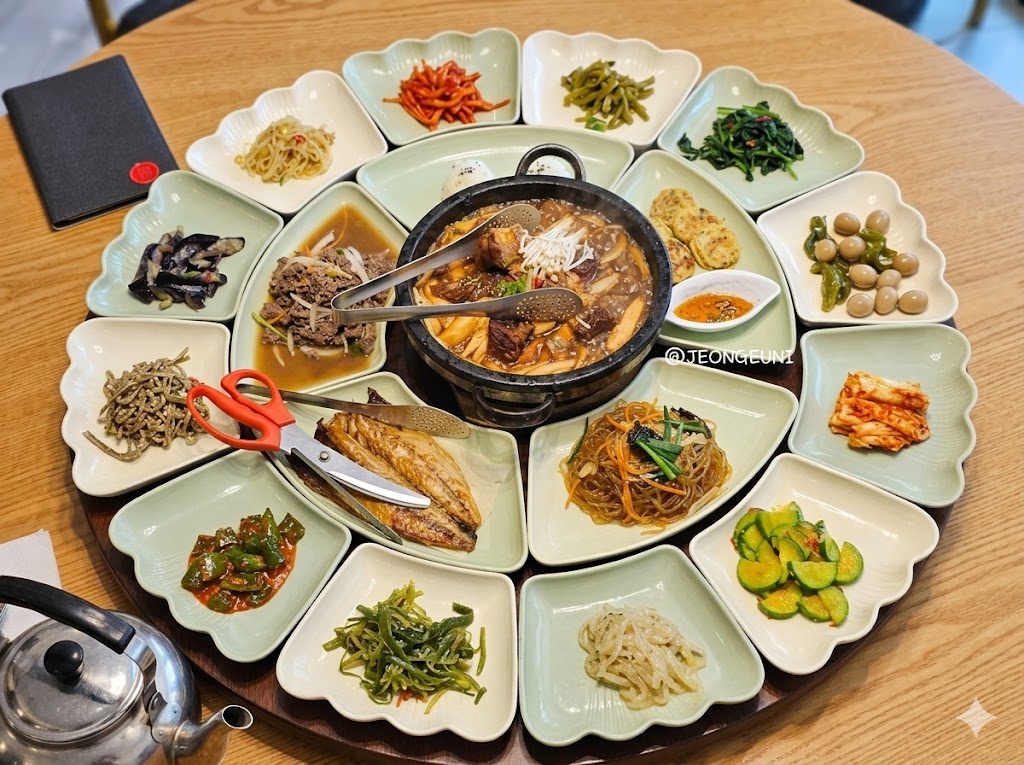
잡채는 단품으로 파는 식당이 없다. 한국에서 잡채를 제대로 만나려면 한정식집을 가야 한다. 15~20가지 반찬이 상 위에 펼쳐지는 그 자리에 잡채가 있다.
명동채움한정식
Myeongdong Chaeum Hanjeongsik
Myeongdong's most accessible hanjeongsik. Halal-certified, English menu, optional hanbok experience. The standard set comes with 18 side dishes — japchae included. Large enough for groups, easy enough for solo travelers.
명동 한복판 한옥 공간. 할랄 인증에 한복 체험까지 가능한 외국인 1순위 한정식집. 영어 메뉴 완비. 기본 한정식에 잡채 포함 18가지 반찬이 나온다.
한가람
Hangaram Hanjeongsik
No artificial seasoning. Seasonal ingredients only. The Ganjang Gejang set is the most-ordered dish among foreign visitors. Five minutes from City Hall station — perfect for itinerary integration.
화학조미료 없는 약선 한정식. 간장게장정식이 외국인 인기 1위. 시청역 5분, 남대문·명동 관광코스와 연계 최적.
📍 시청역
한국의집
Korea House
Government-run cultural venue in Pildong. Traditional performance included with dinner. The most complete "Korean culture + food" experience in one evening — royal court cuisine, not casual dining.
문화체육관광부 직영. 필동 위치. 전통 공연 포함 저녁 코스. 궁중 한식 경험으로는 서울 최고. 특별한 날용.
📍 필동 (명동 인근) · 사전 예약 필수
삼청각
Samcheonggak
A hanok complex beneath Bugaksan — opened in 1970. The setting does half the work. Spring and autumn views are memorable. Dress the occasion; this is a destination, not a stop.
북악산 자락 한옥 공간. 1970년 개관. 봄·가을 뷰가 압도적. 분위기로 한 번, 음식으로 또 한 번.
📍 성북동 · 사전 예약 필수
명동채움·한가람은 예약 없이도 방문 가능하고 영어 소통이 된다. 한국의집·삼청각은 사전 예약 필수.
발음 가이드 (Pronunciation)
"잡채" = Jap-chae
Jap sounds like "jab" with a P at the end · chae rhymes with "day"
잡 — 받침이 있어서 짧고 막히는 소리 · 채 — 길게 늘이지 않고 단호하게
이 시리즈의 다른 글 (Series)