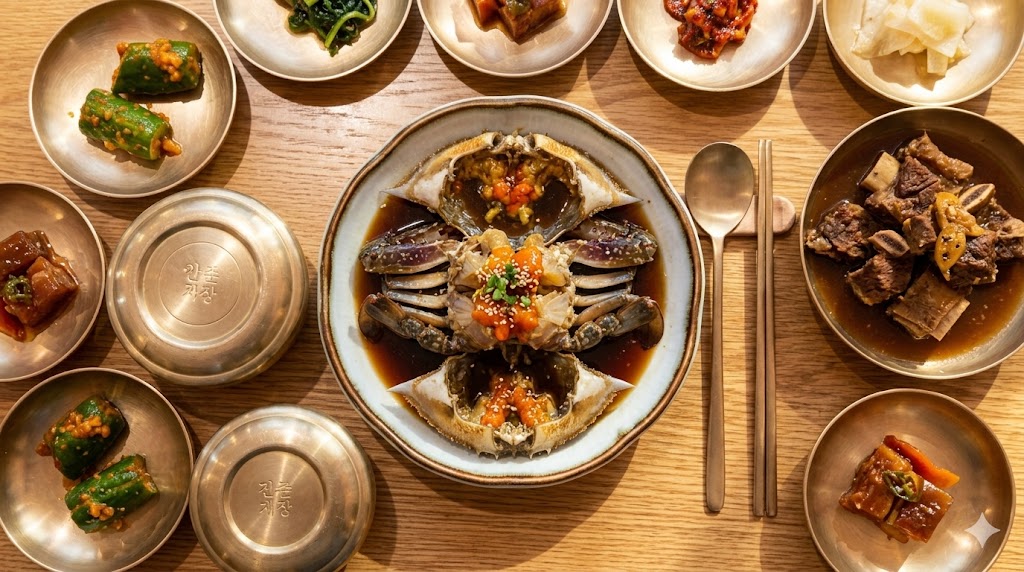
간장게장 · Ganjang gejang — 한국인이 가장 사랑하는 밥도둑. Korea's original rice thief.
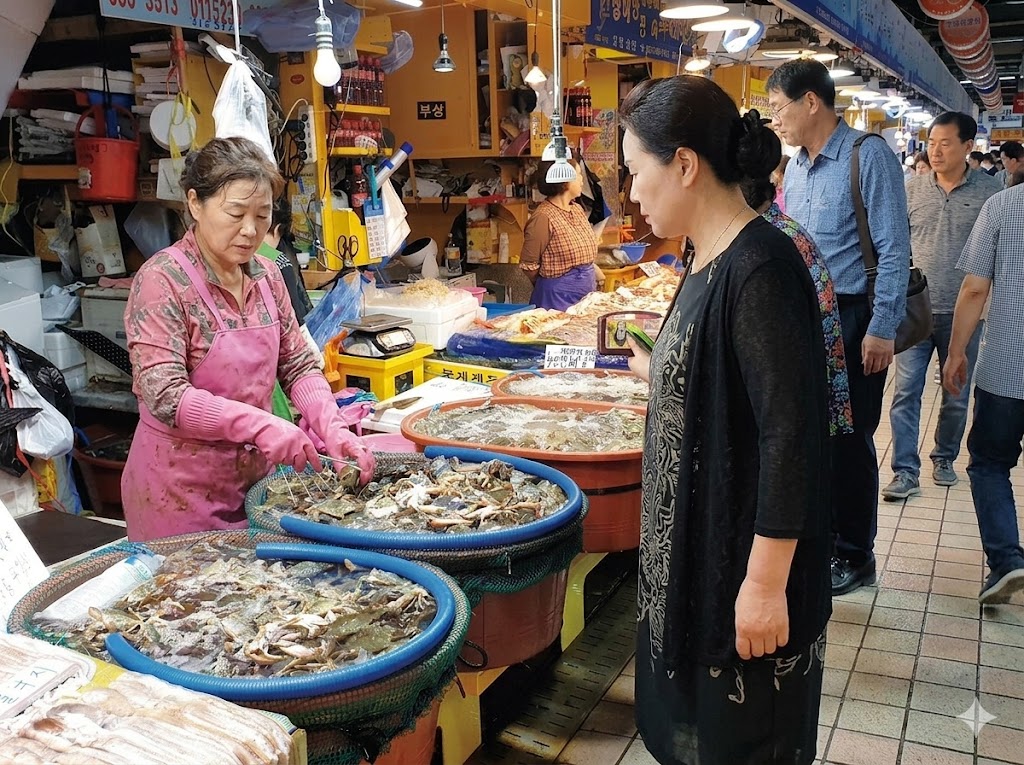
날 음식이라는 말에 일단 멈칫하는 게 맞다. 살아있는 꽃게를 잡아 간장에 담근다 — 그게 간장게장이다. 불도 없고, 열도 없다. 외국인들이 "이게 안전해?"라고 묻는 이유가 있다.
안전하다. 그리고 생각보다 훨씬 정교하다. 간장게장은 간장 붓고 끝이 아니다. 담근 후 이틀이 지나면 간장만 꺼내 펄펄 끓인 뒤 식혀서 다시 붓는다. 이 과정을 두세 번 반복한다. 간장이 게살 안으로 천천히 스며들고, 반복해서 끓인 간장이 잡균을 억제한다. 냉장고가 없던 고려시대부터 이어진 방식이다 — 게를 오래, 맛있게 보존하기 위해 발전한 기술.
지금은 냉장고가 있다. 그런데도 한국인은 이 방식 그대로 만든다. 이유는 하나다. 맛 때문에. 알이 꽉 찬 암꽃게의 게딱지 안에 밥을 넣고 비비는 순간 — 짜고, 달고, 감칠맛이 동시에 터진다. 한 번 해본 사람은 왜 이걸 "밥도둑"이라 부르는지 그 자리에서 이해한다.
그 밥도둑이 지금 세계로 나가고 있다. 틱톡과 유튜브, 미쉐린 가이드, K드라마를 타고. 외국인들은 처음엔 "날것"이라는 두 글자에 멈칫하다가, 한 입 먹고는 표정이 달라진다. 게장은 설명하기 어렵다. 그냥 먹어봐야 한다. 그게 이 음식의 규칙이다.
The hesitation is understandable. Live crab. Raw. Submerged in soy sauce with no heat involved. When foreigners first hear "ganjang gejang," the response is a pause followed by "...is that actually safe?"
It is. And it's not as simple as dumping crabs in a jar. Traditional ganjang gejang involves a multi-step brine cycle: soy sauce is poured over the crabs, then drained after a day or two, boiled, cooled, and poured back. This repeats two or three times. The salt inhibits bacteria, the repeated boiling keeps the brine clean, and each cycle pushes the flavour deeper into the flesh. Korean coastal communities had this figured out during the Goryeo period — centuries before refrigeration was a concept.
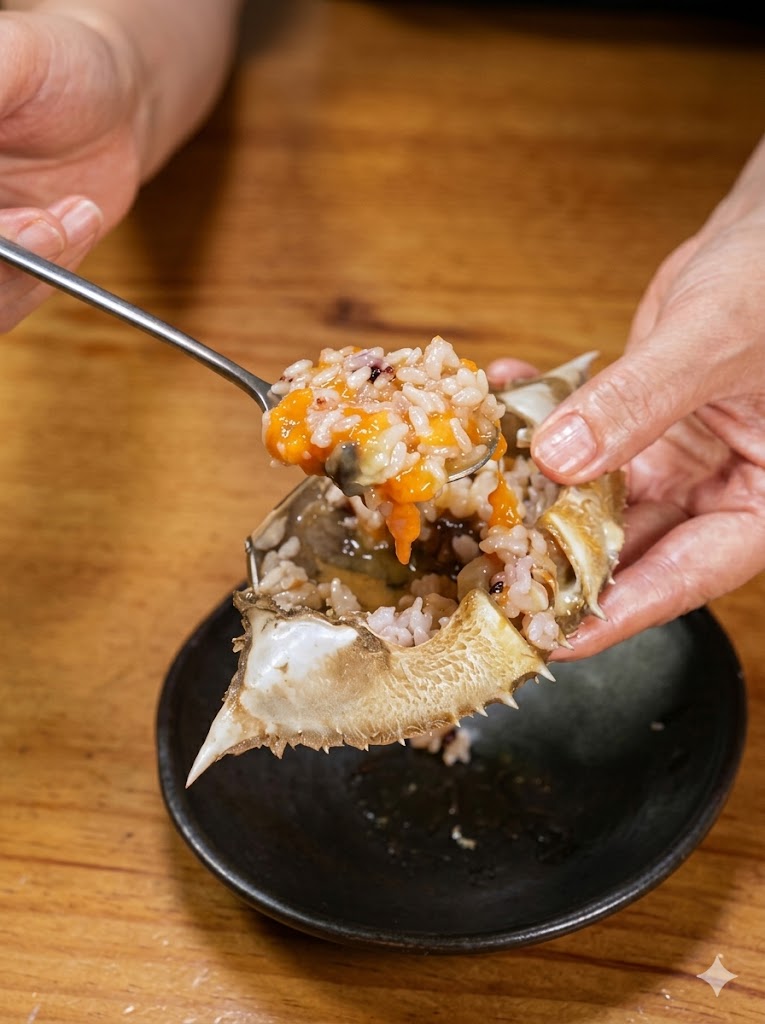
The fridge exists now. Koreans still do it the same way. Because the process is the flavour. The crab absorbs the brine slowly and completely — the roe thickens into something almost buttery, the legs become intensely savoury, and the shell holds everything together. The move is to scoop rice directly into the shell, mix it with the roe and residual sauce, and eat it in one motion. That's the peak of the dish. That's why the Korean word for it is 밥도둑 — rice thief.
The thief is going global. Michelin-starred restaurants in Seoul now feature gejang as a centrepiece. TikTok clips of tourists trying "soy sauce crab" rack up millions of views. The reaction is always the same: hesitation, then silence, then a reach for more rice. The world is meeting the dish Koreans have been quietly eating for centuries — and learning, one shell at a time, why a single serving is never enough.
 간장게장 Ganjang
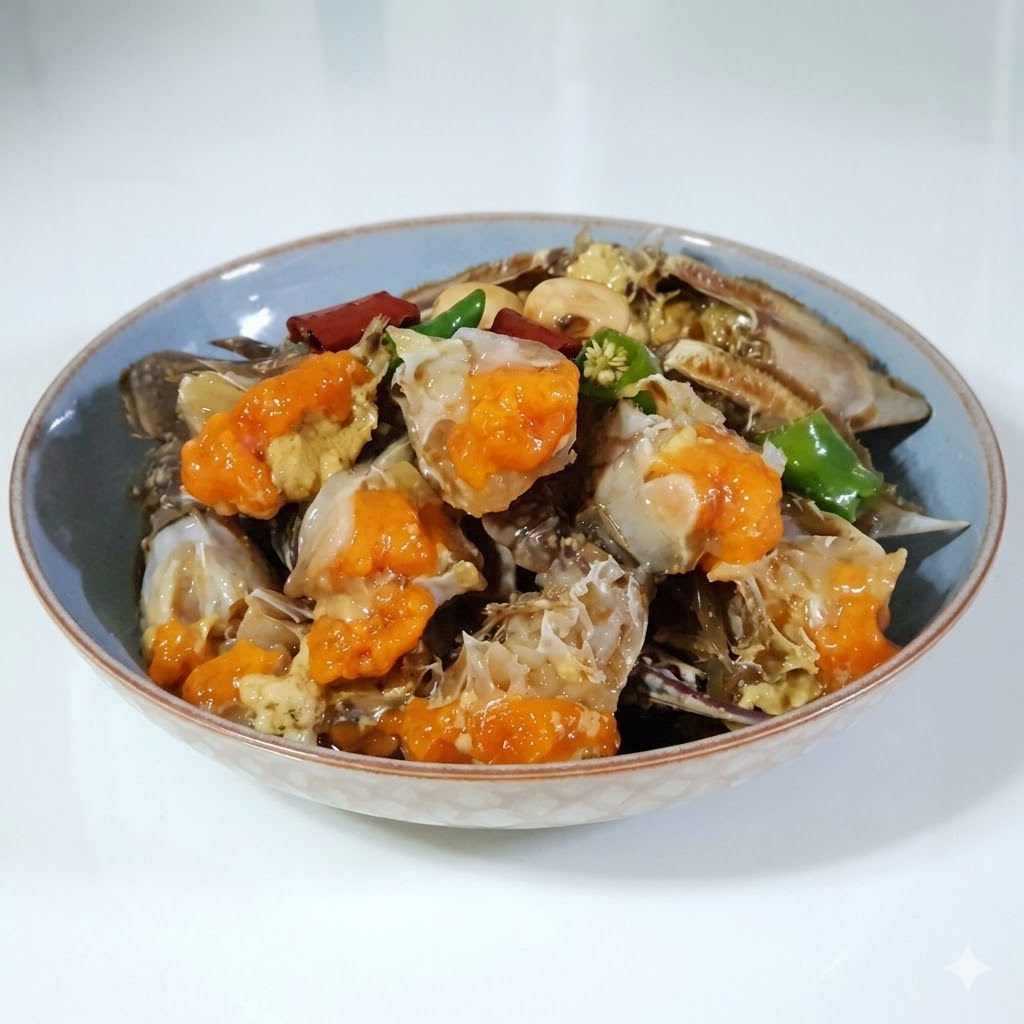
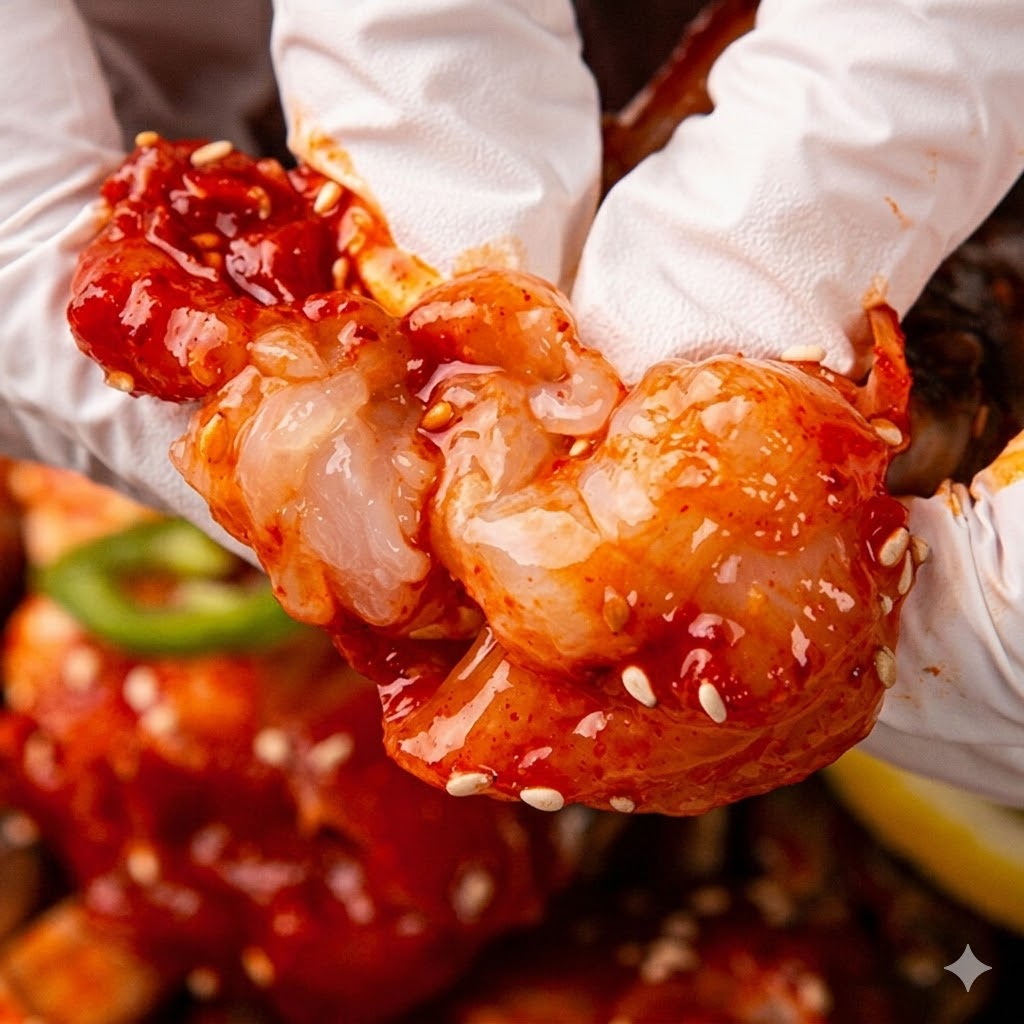 양념게장 Yangnyeom
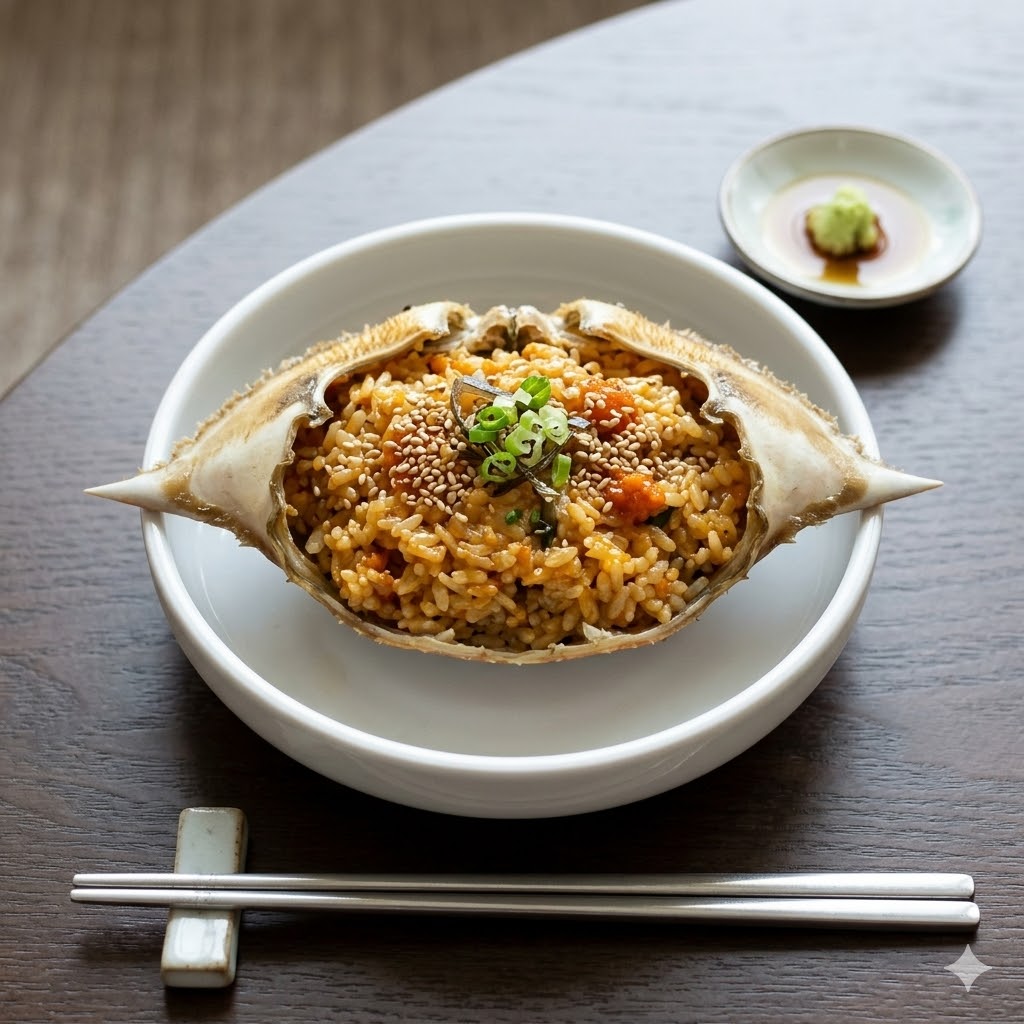 게딱지밥 Shell Rice
같은 꽃게, 세 가지 방식 — one crab, three expressions
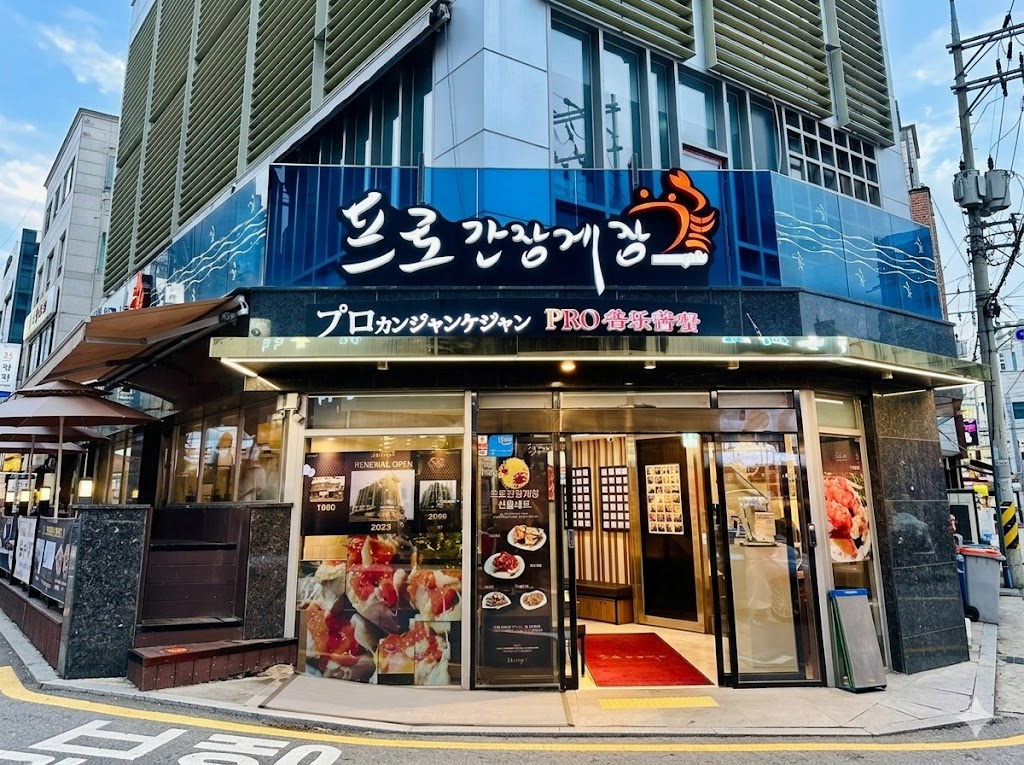
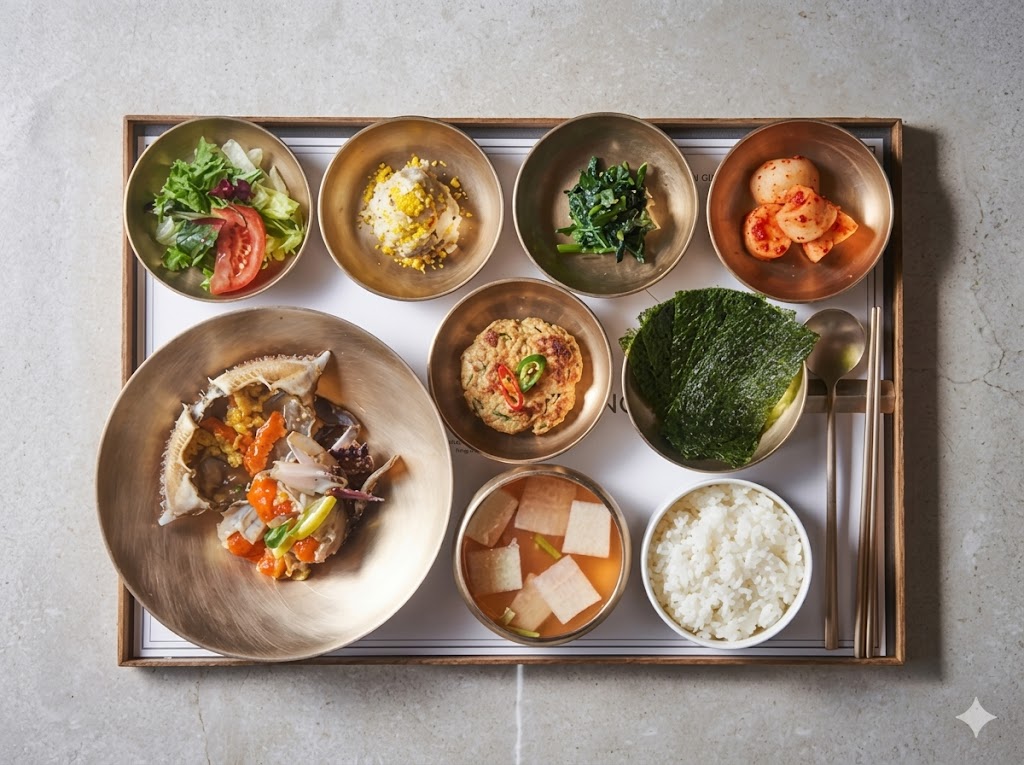
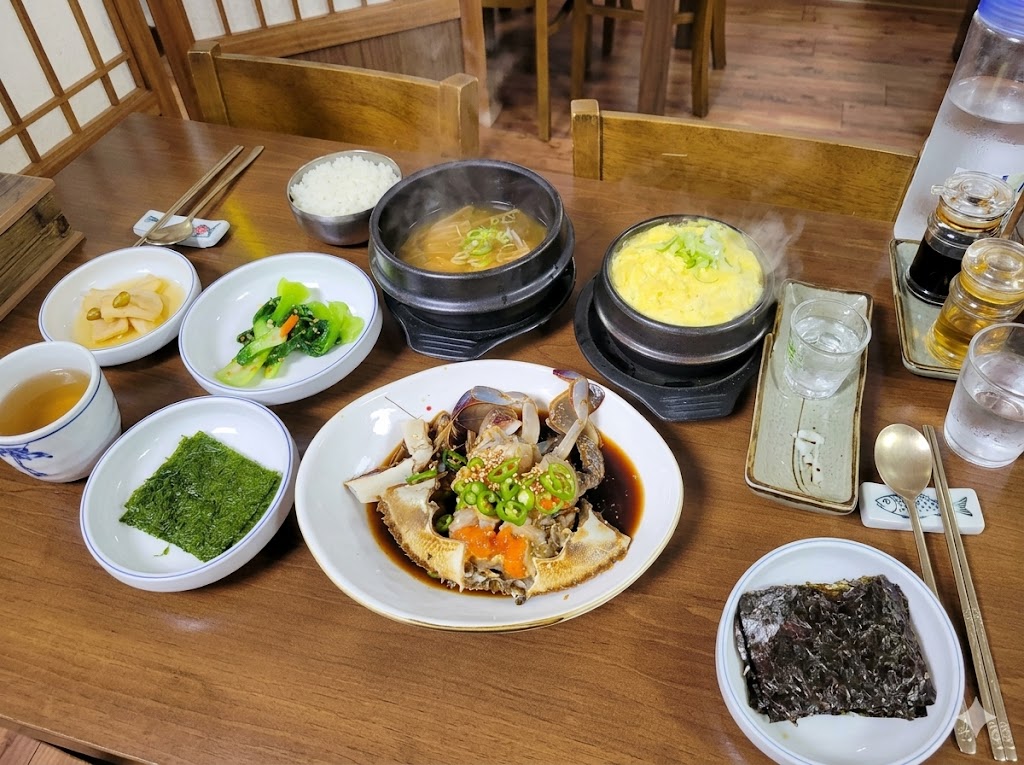
게장정식 한상 · The full gejang set — 이 상이 나오는 순간, 밥 한 공기론 부족합니다.