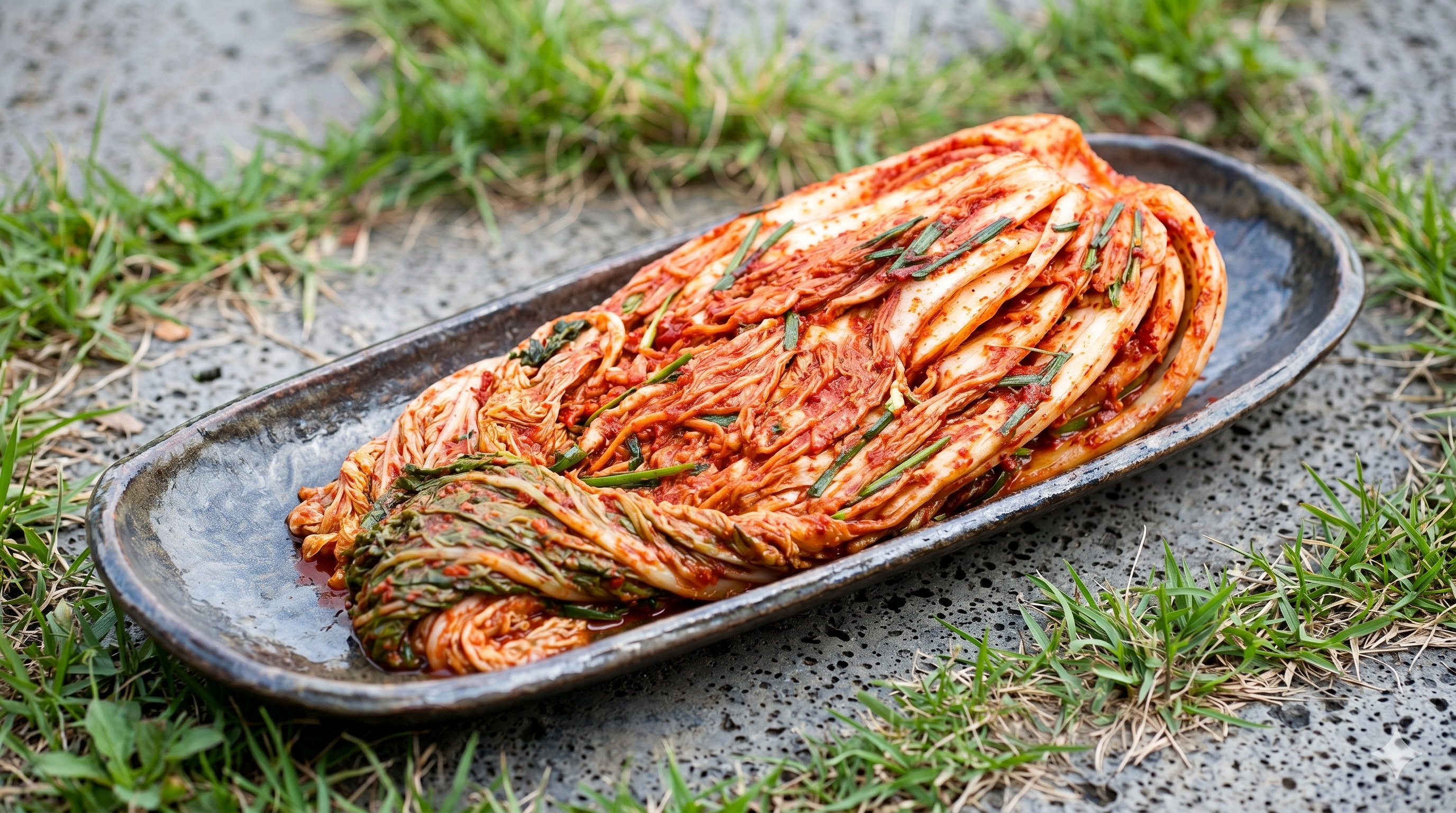
배추김치 · Baechu-kimchi — the one you already know. One of 200+.
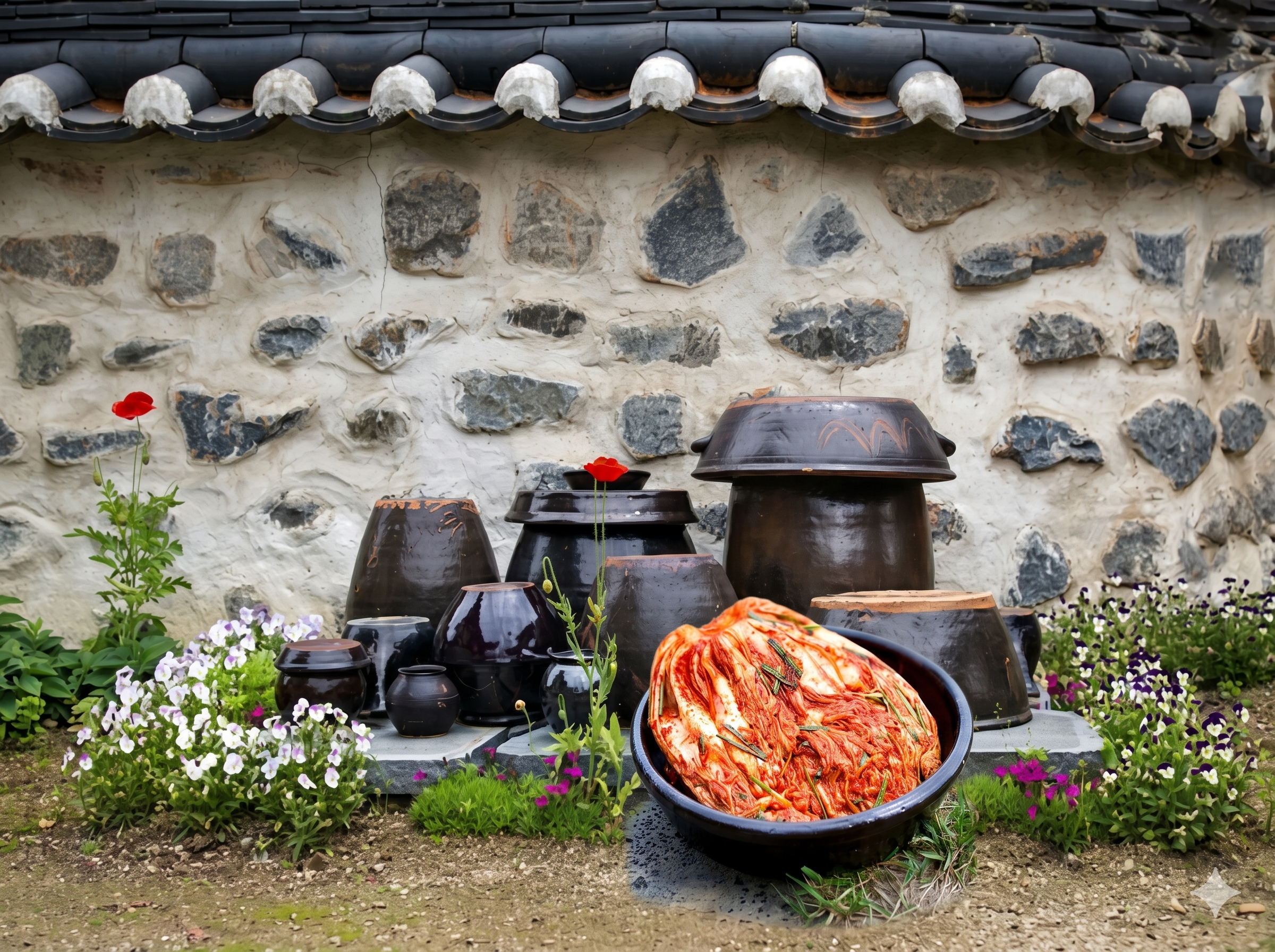
대부분의 외국인은 김치를 딱 하나의 이미지로 기억합니다. 빨갛고, 맵고, 냄새 강한 그것. 그 인상 때문에 한국 식당에서 반찬 그릇을 슬쩍 피하게 되는 것. 충분히 이해합니다. 하지만 그건 김치 200가지 중 단 하나의 표정일 뿐입니다.
놀라운 사실 하나: 고추가 한국에 들어온 건 불과 400년 전입니다. 임진왜란 무렵, 포르투갈 상인이 일본에, 일본이 조선에 전한 것이 시작이었습니다. 그 전 수천 년 동안 김치는 하얀색이었습니다. 소금과 마늘, 생강으로 절인 담백한 채소. 우리가 아는 '빨간 김치'는, 역사 속 신참입니다.
지금 한국인의 냉장고를 열면, 김치는 언제나 거기 있습니다. 여름엔 아삭한 오이소박이, 겨울엔 시원한 동치미, 1년 내내 깊게 숙성된 배추김치. 한국인에게 김치는 반찬이 아닙니다. 공기 같은 존재입니다.
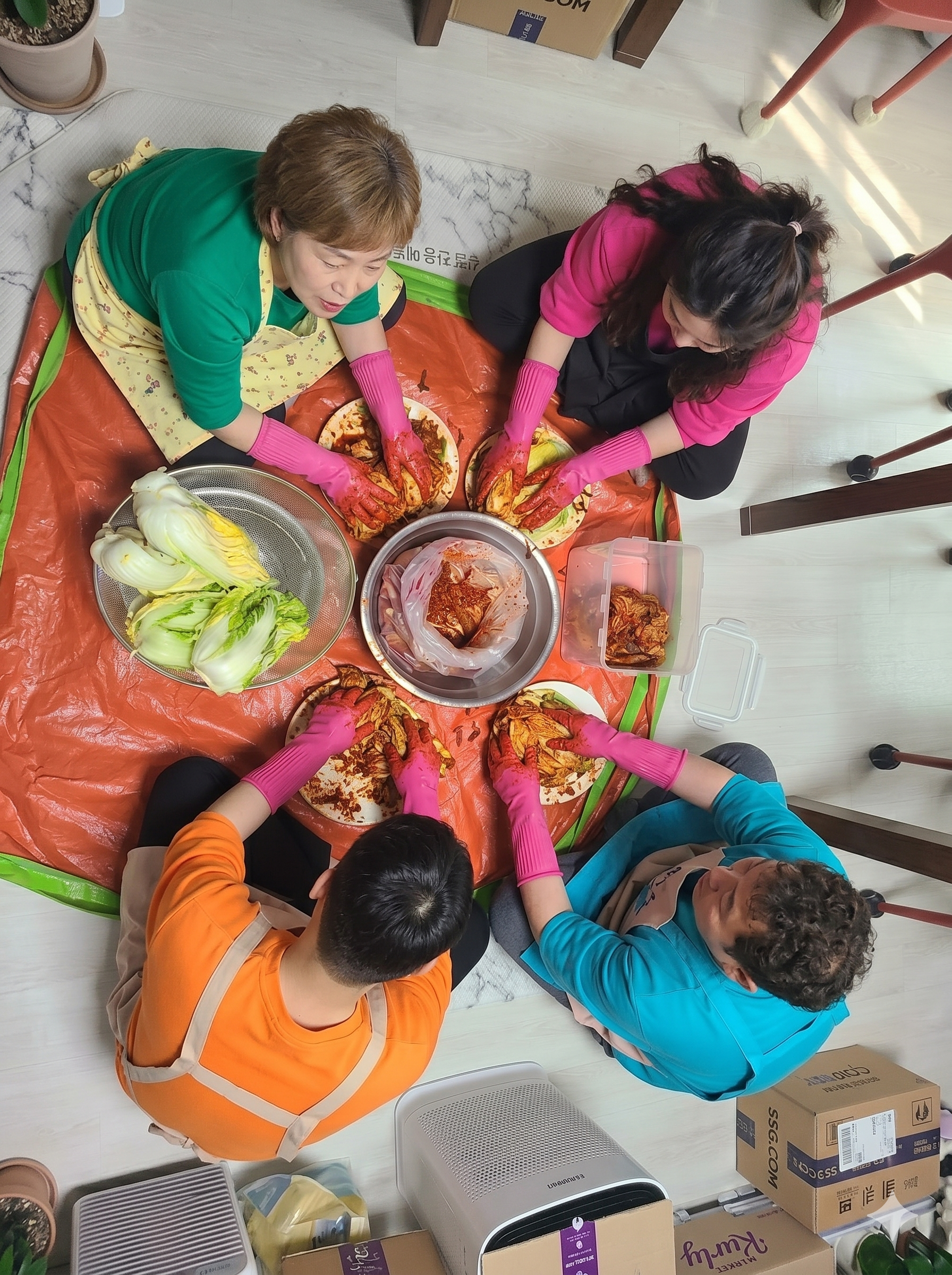
그 공기 같은 존재를 위해 한국엔 전용 냉장고가 따로 있습니다. 김치냉장고 — 일반 냉장고와 별도로, 오직 김치만을 위한 가전제품. 신혼 살림 필수품 1위를 수십 년째 놓치지 않는 그것. 2013년엔 늦가을 온 가족이 모여 수백 포기의 김치를 함께 담그는 '김장문화'가 유네스코 인류무형문화유산으로 등재됐습니다. 단순한 레시피가 아니라 나눔과 유대의 의식으로서. 그리고 지금, 세계는 이제야 김치를 알아보기 시작했습니다. 발효식품 붐, 프로바이오틱 열풍, K-컬처의 물결을 타고 — 한국인이 수천 년째 당연하게 먹어온 것이, 갑자기 지구 반대편에서 '슈퍼푸드'가 됐습니다.
Most people outside Korea picture kimchi as one thing: red, spicy, aggressively pungent. The kind of side dish that gets quietly slid to the edge of the table. Fair enough. But that's just one face of over 200 different kimchi varieties.
Here's the twist: chili peppers only arrived in Korea about 400 years ago — brought by Portuguese traders to Japan, then passed on to Joseon Korea around the time of the Imjin War. For the two thousand years before that, kimchi was white. Fermented vegetables with salt, garlic, and ginger. No heat, no red. The fiery version is the newcomer.
Open any Korean refrigerator today and you'll find kimchi. Cucumber kimchi in summer, icy water kimchi in winter, and the deep, slow-fermented cabbage kind always in the back. For Koreans, kimchi isn't a side dish. It's the baseline. Without it, a meal is just food.
And because that baseline is non-negotiable, Korean households own a second refrigerator — one that exists solely for kimchi. The kimchi fridge is a cultural artifact: it maintains precise temperature and humidity by season, it's a standard wedding gift, and it has outsold every other kitchen appliance in Korea for decades. In 2013, UNESCO added kimjang — the late-autumn ritual of making hundreds of heads of kimchi together as a family — to its Intangible Cultural Heritage list. Not as a food. As an act of community. Then K-culture went global, the fermentation food boom hit, and the world suddenly discovered what Koreans had been quietly eating for three thousand years. The West called it a superfood. Koreans just called it Tuesday.
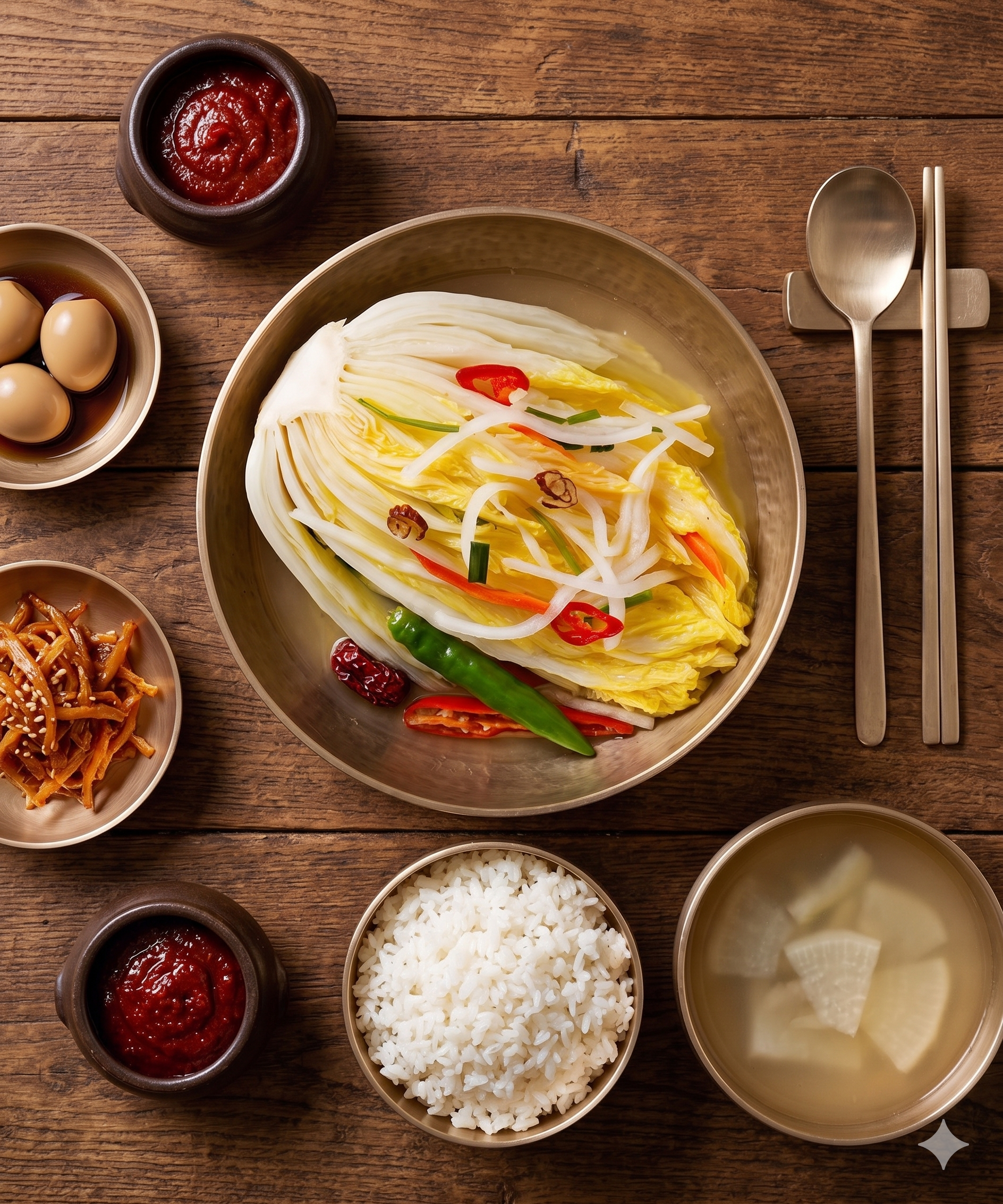 백김치 Baek
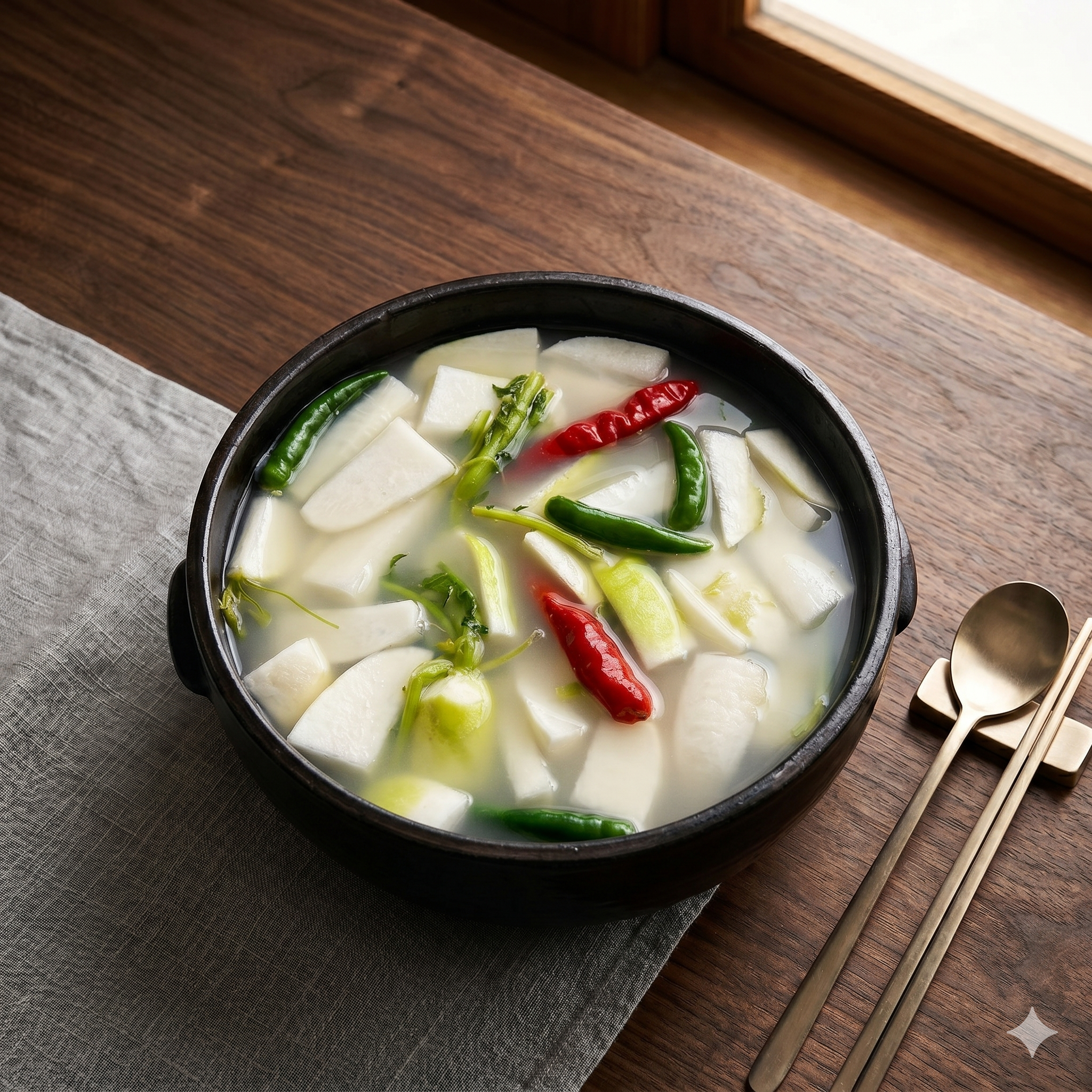 동치미 Dongchimi
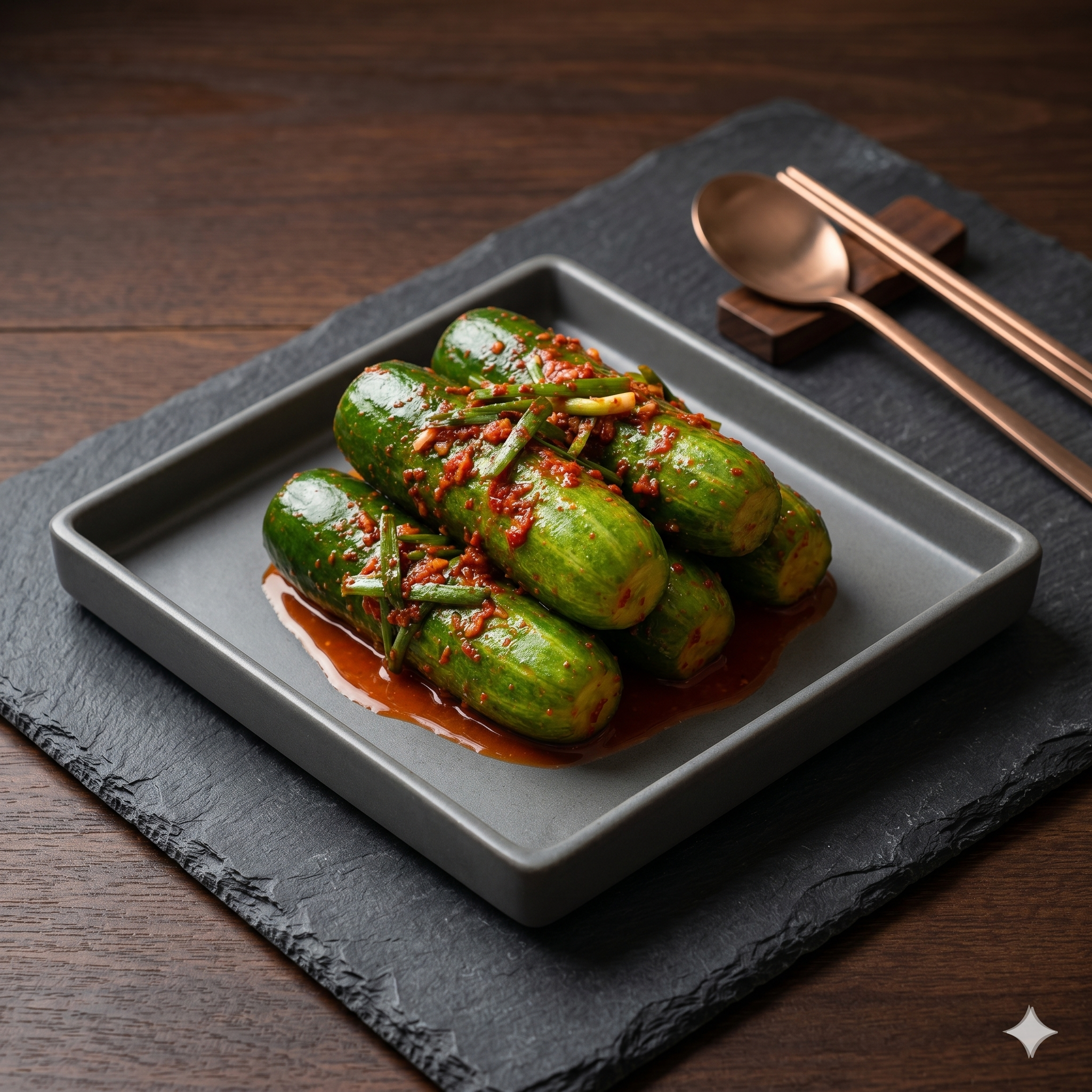 오이소박이 Oi-sobagi
200가지 중 3가지 — just three of 200+
매운 걸 못 먹어도 괜찮습니다. 여기서부터 시작하세요. You don't have to start with the spicy stuff.
Next up → Doenjang. Older than miso. Deeper than anything you've tried.
In Korea, you don't say "Cheese!" for photos. You say "Kimchi!" — Now you know why.