비빔밥
Bibimbap
v1 · The Original Bowl
"You don't need gochujang (Korean chilli paste). When Jeonju first served this bowl, gochujang didn't exist yet. What you're eating is actually the newest version. — Bibimbap."
고추장 없이도 됩니다. 전주에서 처음 만들어질 때 고추장은 아직 없었습니다. 지금 당신이 알고 있는 비빔밥은 사실 제일 나중 버전입니다. — 비빔밥 이야기.
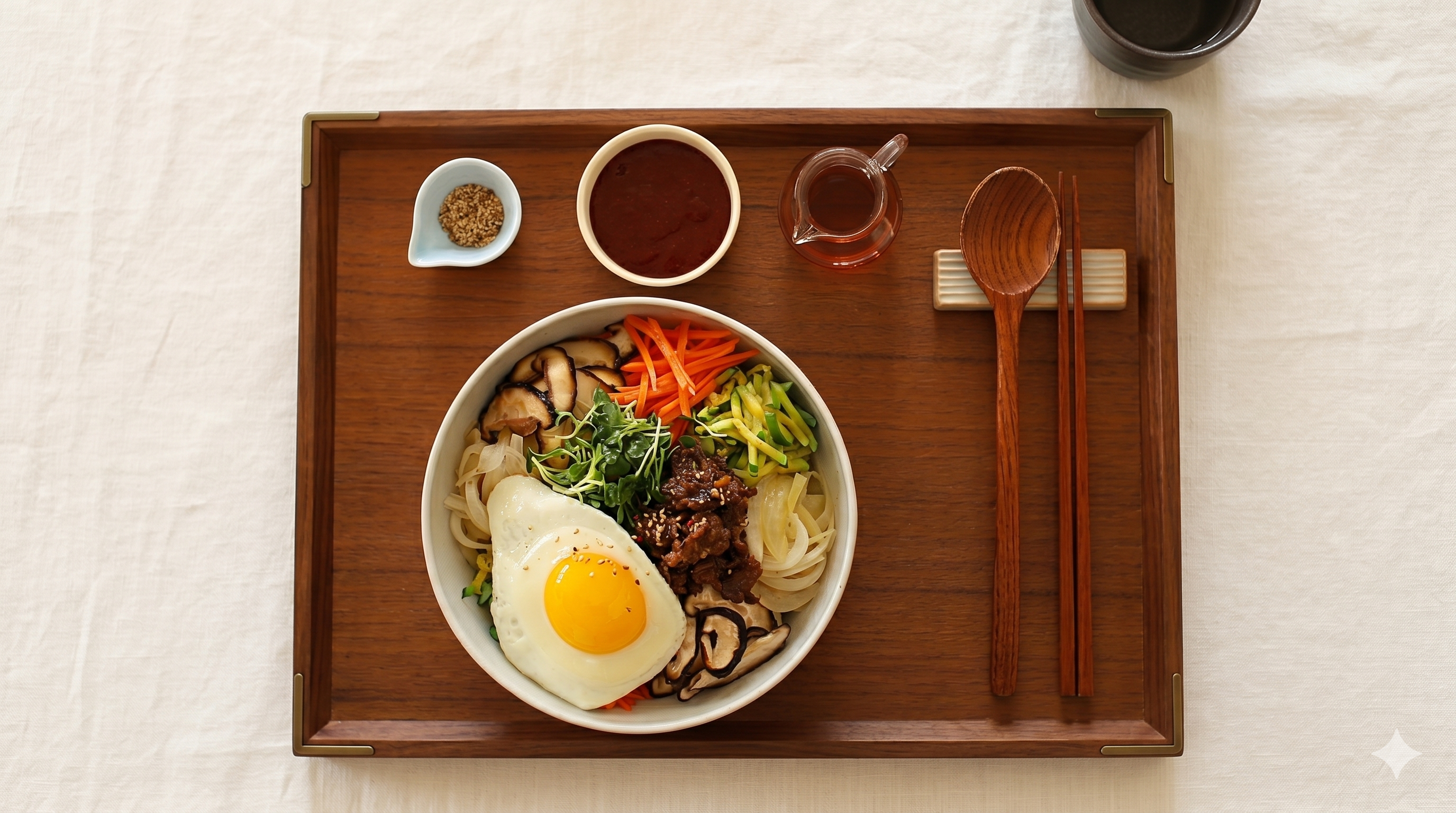
전주비빔밥 · 30가지 고명이 올라간 유기그릇 비빔밥
Every Korean dish has a creation myth. Bibimbap's is this: leftover rice and vegetables, tossed together before ancestral rites, eaten communally after the ceremony. Simple. Humble. Accidental. Except none of that explains why a single bowl requires up to thirty separate garnishes, each seasoned differently, each cooked at a precise temperature, each placed in a specific position before you mix everything into controlled chaos.
The real story is craft. Jeonju — a city that has always taken food seriously — turned bibimbap into a culinary argument. Not just a meal, but a statement about what rice and vegetables can become when you pay attention. The city's bibimbap uses soybean sprouts grown in Jeonju water, beef-fat-glazed rice, and seasonal mountain vegetables. You're not eating leftovers. You're eating someone's full working day.
비빔밥의 기원 이야기는 이렇습니다. 제사 음식을 비벼 먹었다. 바쁜 농번기에 한 그릇에 해결했다. 둘 다 그럴듯하고, 둘 다 이 음식이 얼마나 정성스러운지를 설명하지 못합니다. 나물 하나를 볶는 데 참기름과 마늘과 소금의 비율이 따로 있고, 그걸 30가지 반복합니다. 전주는 그 정성을 식당 메뉴로 만들었습니다. 같은 밥, 같은 야채인데 전주에서 먹으면 다른 이유가 있습니다.
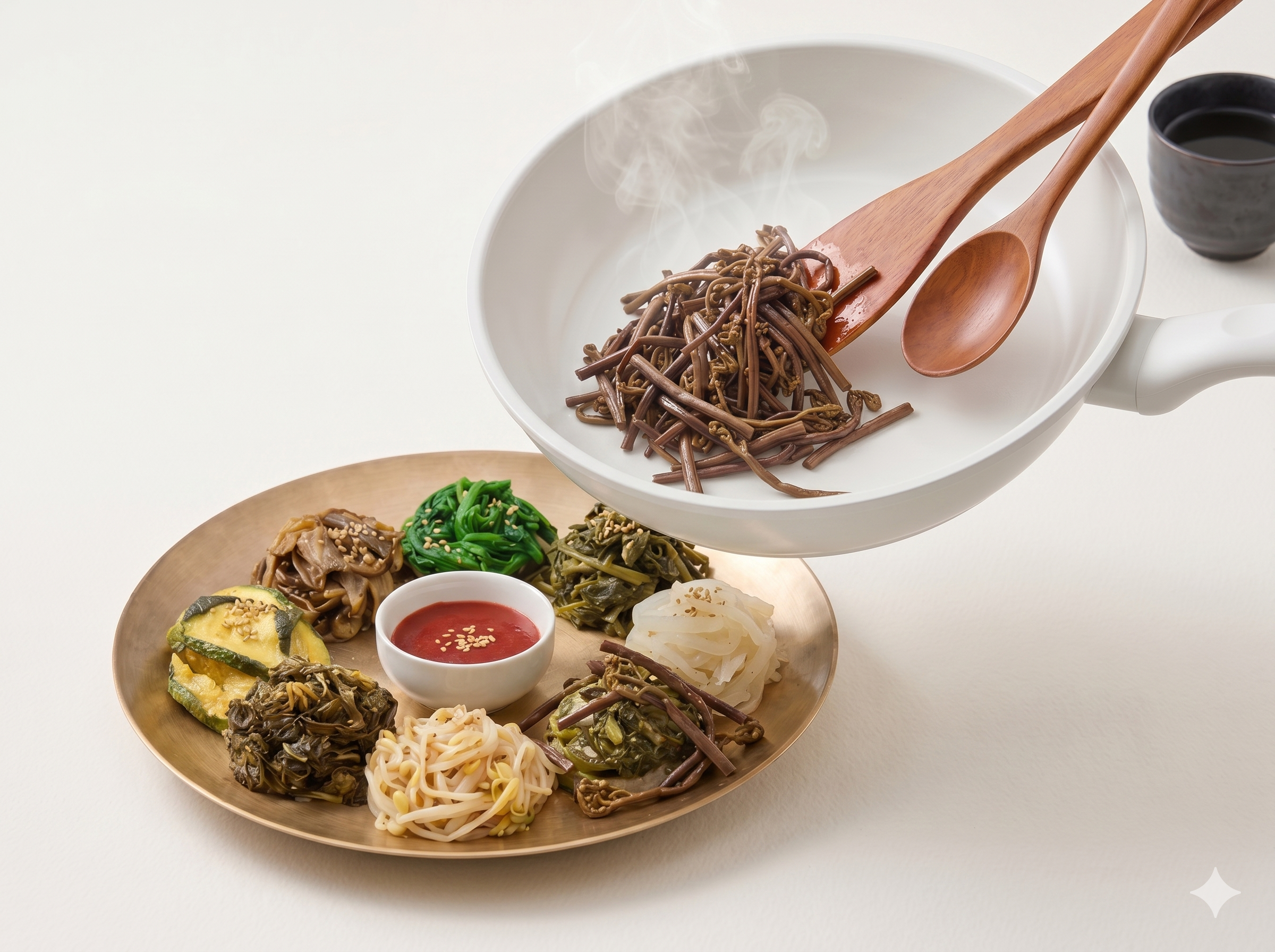
나물 개별 볶기 — 비빔밥 정성의 본체
Then there's Jinju — the other city with a claim. Jinju bibimbap never uses gochujang. It uses a soy-based sauce, beef yukhoe (raw marinated beef), and vegetables that are lighter, less processed. When gochujang arrived in Korea in the 16th century, Jinju kept its original recipe. Jeonju eventually adopted the paste and made it famous. Two cities, one dish, completely different philosophies about what bibimbap should taste like.
그리고 진주가 있습니다. 진주비빔밥은 고추장을 쓰지 않습니다. 간장 베이스의 양념, 육회, 가볍게 무친 나물. 16세기에 고추장이 들어왔을 때 진주는 원래 레시피를 지켰습니다. 전주는 고추장을 받아들이고 세계에 알렸습니다. 같은 이름, 다른 철학입니다.
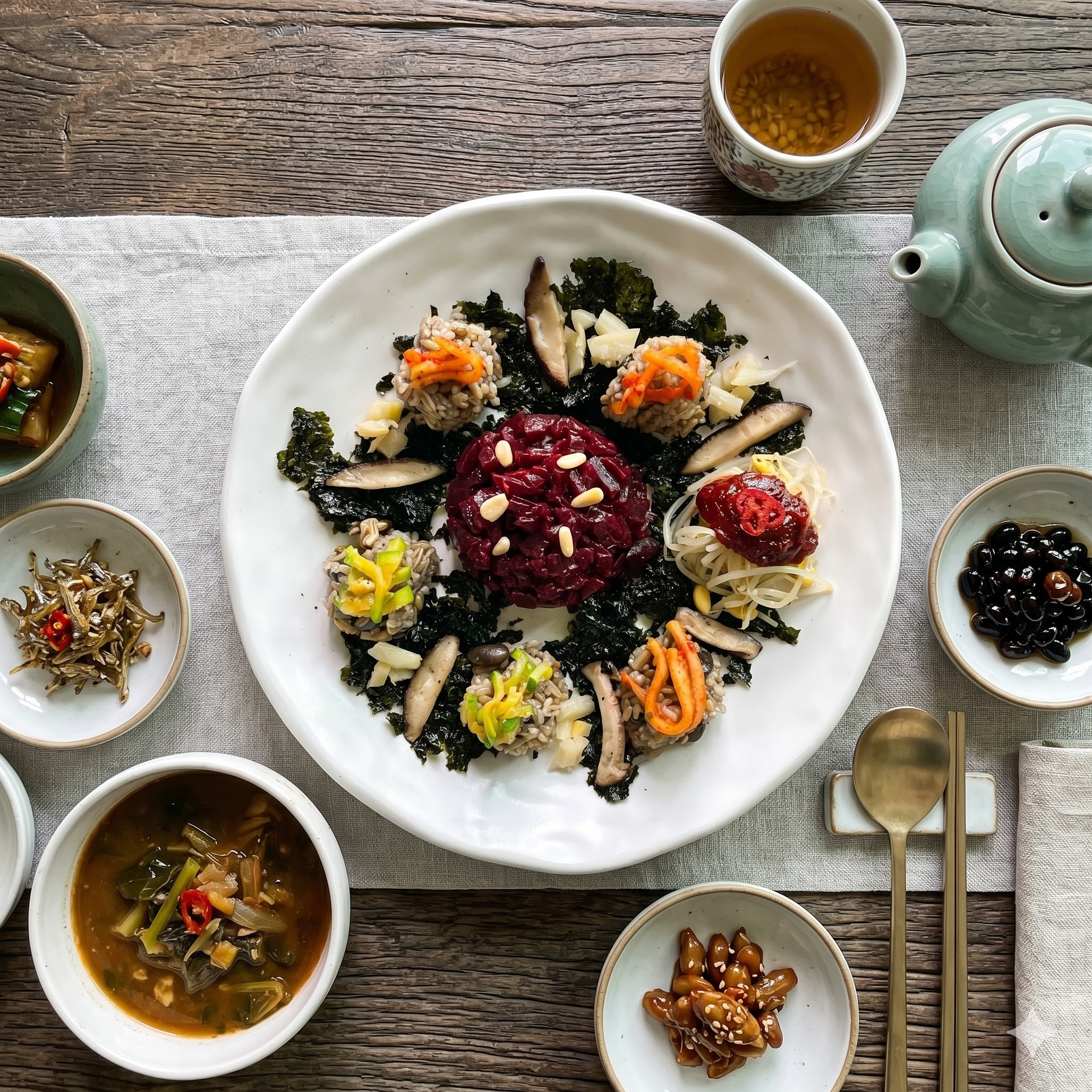
"30가지 나물이 만든 정성의 왕. 냉장고 파먹기로도 충분한 집밥의 왕."
Here's the twist: the dish that requires thirty garnishes and a chef's full day has become Korea's most popular "I have nothing in the fridge" meal. Young Korean homemakers share 냉파비빔밥 (fridge-cleanout bibimbap) recipes online — leftover vegetables, one egg, gochujang, done. Thirty garnishes in a restaurant. Zero guilt about five at home. Both versions are considered real.
반전이 있습니다. 30가지 나물을 하루 종일 준비하는 이 음식이, 한국에서 가장 인기 있는 '냉장고 파먹기' 메뉴가 됐습니다. 젊은 주부들이 냉파비빔밥 레시피를 온라인에 공유합니다 — 남은 야채, 달걀 하나, 고추장 한 숟갈이면 끝. 식당에서는 30가지, 집에서는 5가지. 둘 다 비빔밥입니다.
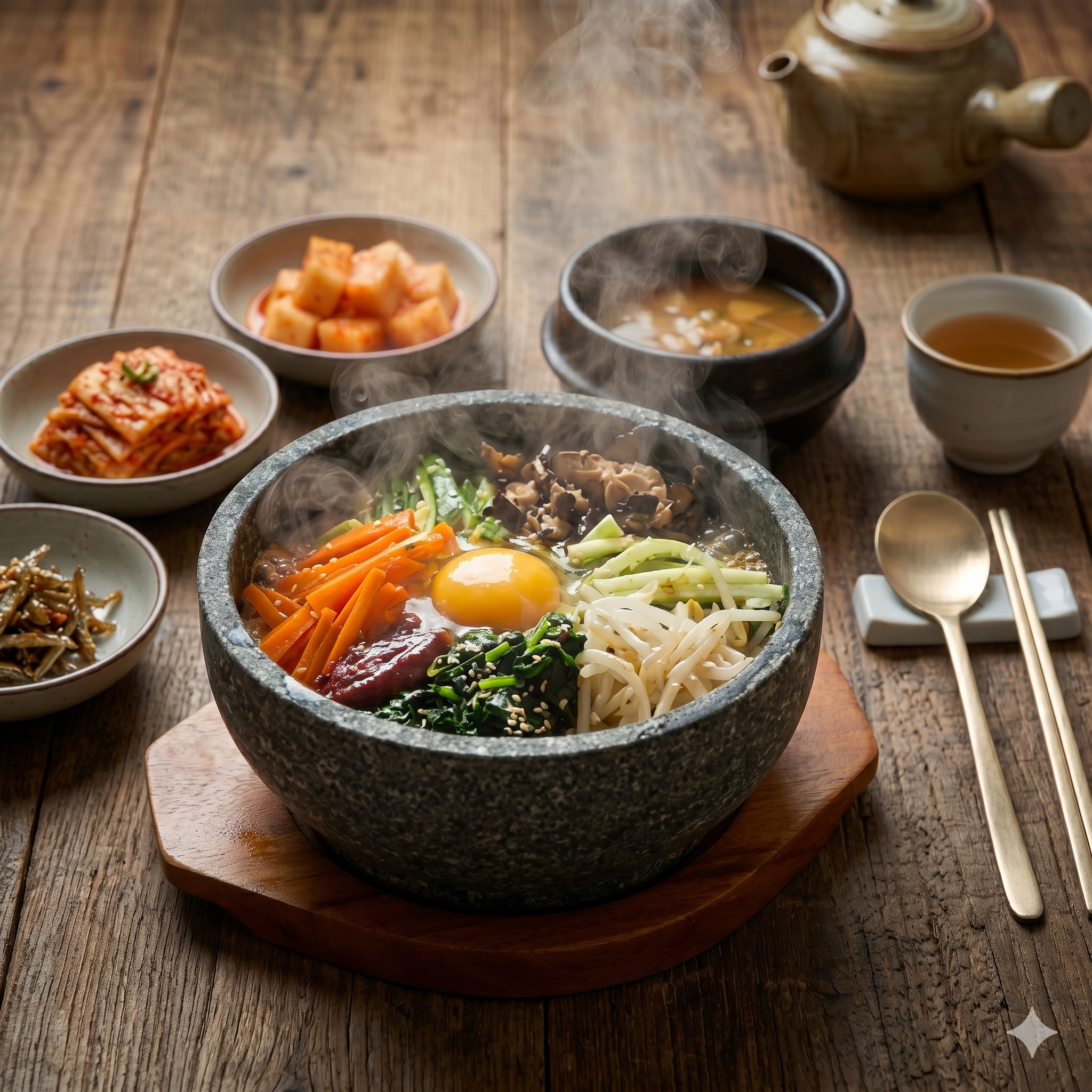
THE 400° BOWL
Dolsot bibimbap arrives in a stone pot heated to 400°C. The rice touching the stone caramelizes into a golden crust called nurungji. When you're done eating, the server pours hot water into the pot — the scorched rice dissolves into a smoky tea called sungnyung. One dish, two endings.
돌솥비빔밥은 400도로 달군 돌솥에 담겨 나옵니다. 돌솥 바닥의 밥이 눌러붙어 누룽지가 되고, 다 먹은 뒤 물을 부으면 숭늉이 됩니다. 밥으로 시작해서 차로 마무리하는 음식입니다.
BEFORE THE RED PASTE
Jinju bibimbap predates gochujang. The city's version uses a soy-based sauce and raw marinated beef (yukhoe) — the original formula before chili peppers arrived in Korea from Japan in the 16th century. If you think all bibimbap is red and spicy, Jinju would like a word.
진주비빔밥에는 고추장이 없습니다. 간장 베이스에 육회를 올립니다. 고추가 일본을 통해 조선에 들어온 건 16세기. 진주는 그 이전 레시피를 지금도 씁니다. 빨간 비빔밥이 전부라고 생각한다면, 진주에서 한 번 먹어보세요.
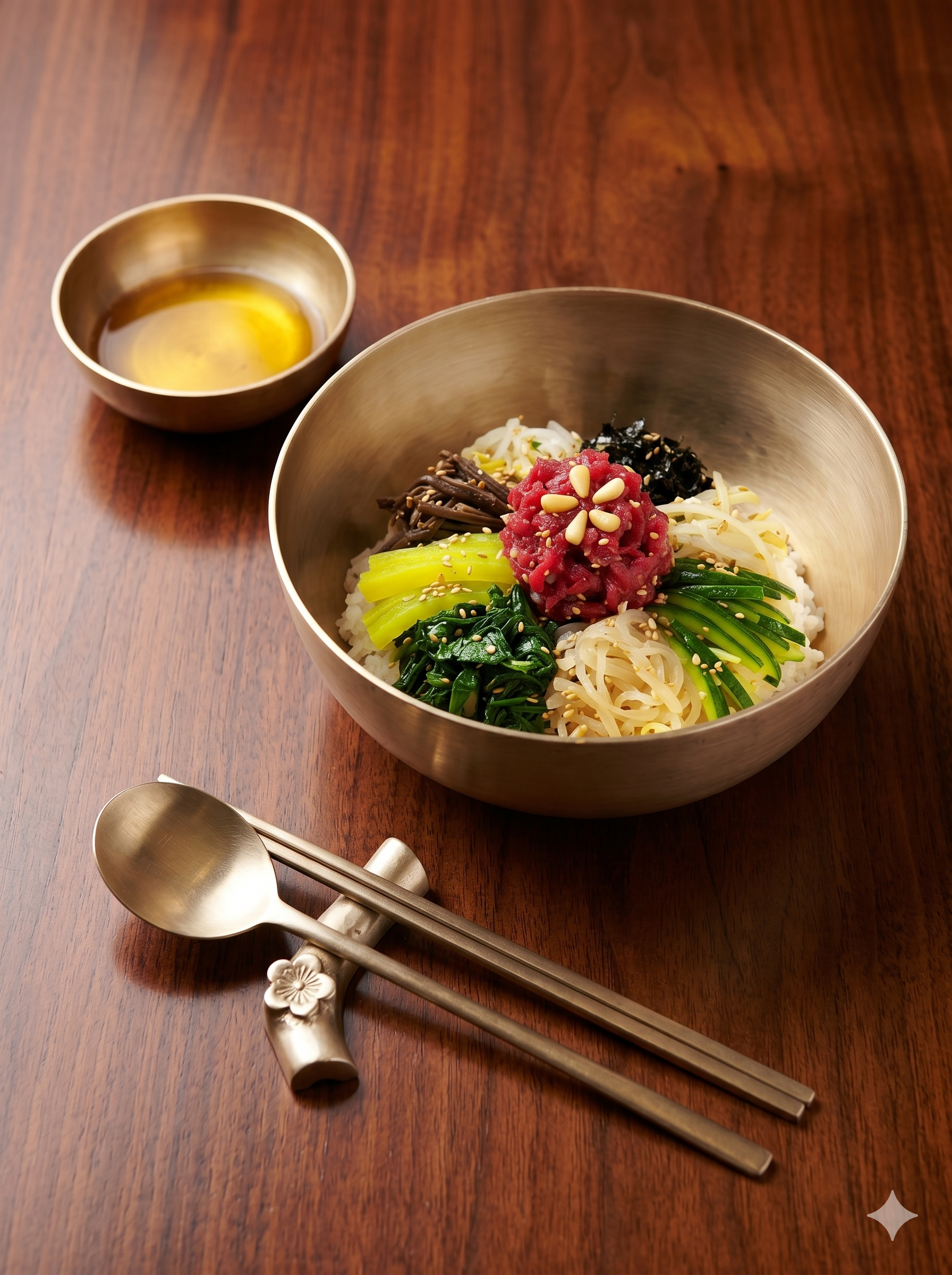
ACCIDENTALLY VEGAN-READY
Bibimbap's base is vegetables and rice — already plant-based by default. At any Korean restaurant, you can request that the meat and egg be removed. The kitchen will simply omit them; the bowl still makes sense without them. No special menu needed. Just ask.
비빔밥의 본체는 나물과 밥입니다. 어느 식당에서든 고기와 달걀을 빼달라고 요청하면 됩니다. 따로 비건 메뉴를 찾지 않아도 됩니다. 그냥 말하면 됩니다.
5 COLORS, 1 BOWL
Traditional bibimbap follows the Korean concept of obangsaek — five colors representing five elements. Green (spinach), red (gochujang/carrot), yellow (egg), white (bean sprouts/radish), black (mushroom/seaweed). The color variety isn't decorative. It's nutritional logic dressed up in aesthetics.
전통 비빔밥은 오방색(五方色)을 따릅니다. 청(시금치), 적(고추장·당근), 황(달걀), 백(콩나물·무), 흑(버섯·김). 색깔이 예쁜 이유가 있습니다. 영양의 균형을 눈으로 확인하는 방식입니다.
📍 전주 (Jeonju) — The Source
한국집
Hankookjip · Jeonju Original
The grandmother of all Jeonju bibimbap restaurants. Founded in 1952 by the late 이분례, now in its third generation. This is the restaurant that first made bibimbap a sit-down destination — before that, it was a dish you ate standing at a market. President Park Chung-hee visited. The recipe hasn't changed.
고(故) 이분례 씨가 1952년 문을 연 대한민국 최초 전주비빔밥 전문점입니다. 지금은 3대째 운영 중입니다. 이 집이 전주비빔밥을 '찾아가서 먹는 음식'으로 만들었습니다. 박정희 대통령도 이 집을 찾았습니다. 레시피는 그대로입니다.
고궁
Gogung · Royal Palace Bibimbap
The name means "old palace" — and it means it. Gogung serves bibimbap in yugi bowls (bronze vessels) handcrafted by a Registered Cultural Heritage artisan. Thirty-plus garnishes, arranged in color order. There's a small museum on the second floor showing the history of bibimbap while you wait. The bowl that arrives looks like something that belongs in a palace, because the inspiration did. During the Roh Moo-hyun administration, Gogung participated in a landmark 1,000-person bibimbap event — the dish became diplomatic.
이름 그대로입니다. 무형문화재 장인이 만든 유기그릇에 30여 가지 고명을 올려 냅니다. 2층에 비빔밥 역사 전시실이 있어 기다리는 동안 볼 수 있습니다. 외국인 접근성이 좋고, 놋그릇과 돌솥 중 선택해 주문할 수 있습니다.
📍 서울 (Seoul) — Four Ways In
한국집 롯데월드몰점
Hankookjip · Lotte World Mall Branch
The 1952 Jeonju original, now on the 5th floor of Lotte World Mall — right next to the theme park. The recipe traveled from Jeonju unchanged. The view changed considerably: Seokchon Lake below, roller coaster sounds somewhere above. Post-rides, pre-evening plans. The most unexpected place to eat Korea's most serious bibimbap. Full menu: Jeonju bibimbap, yukhoe bibimbap, nakji bibimbap, dolsot.
전주 한국집이 잠실 롯데월드몰 5층에 있습니다. 레시피는 전주 본점 그대로입니다. 롤러코스터 탄 다음, 석촌호수 보이는 창가에서 전주비빔밥 한 그릇. 놀이공원 음식이 이렇게 진지할 수 있다는 사실이 놀랍습니다.
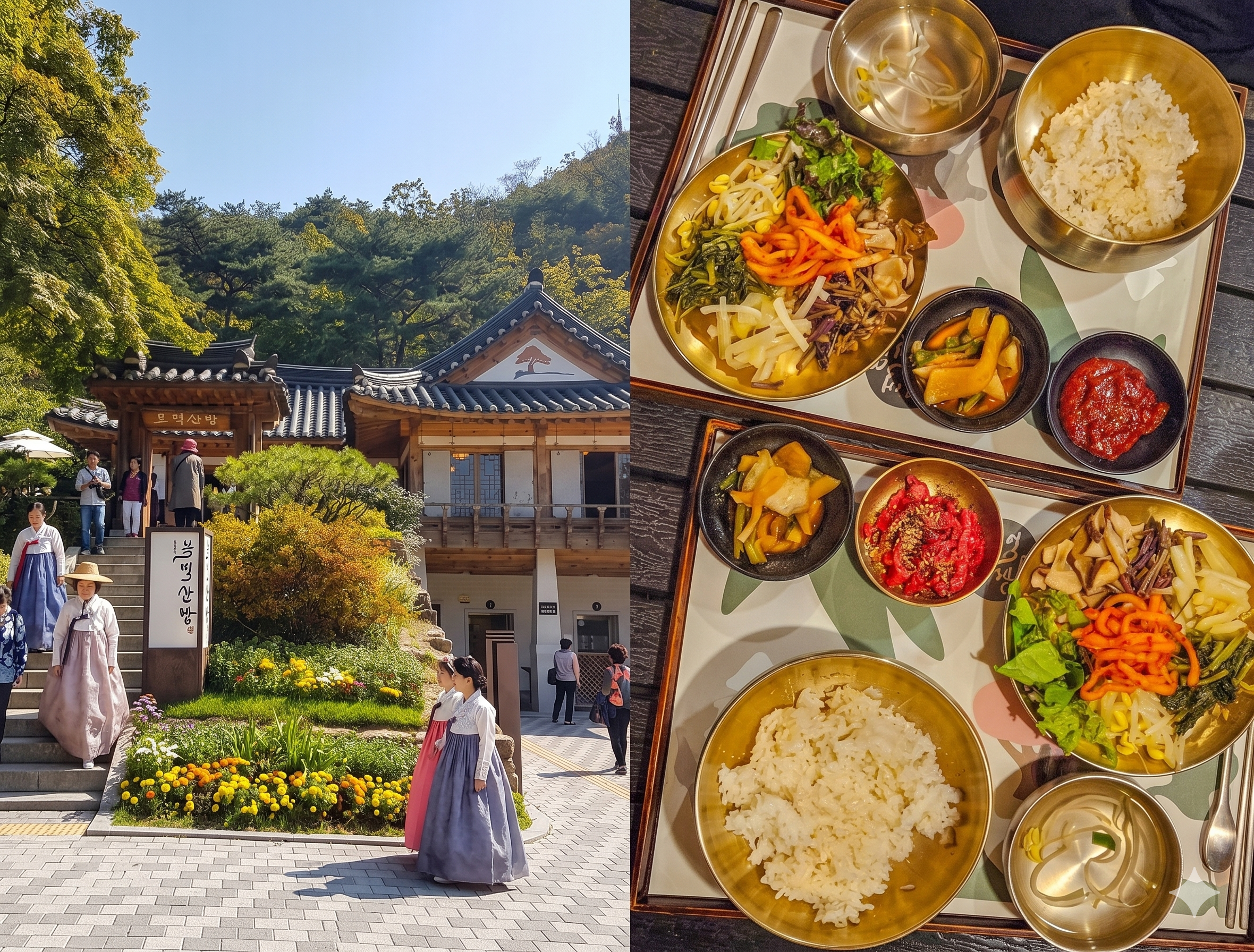
목멱산방
Mokmyeoksanbang · The Mountain House
목멱(Mokmyeok) is what Seoul's mountain was called before it became Namsan. This restaurant took that name and built a menu around it. Five minutes from the N Seoul Tower cable car — the natural stop after the view that K-pop Demon Hunters made famous. Grade-1++ Korean beef yukhoe bibimbap. Gondeure (mountain herb) soy sauce bibimbap. The vegetables taste like they came down from the mountain with you. Heavily frequented by international visitors.
목멱은 남산의 조선 시대 이름입니다. N서울타워를 내려온 다음, 케이블카에서 5분 거리에 있습니다. 투뿔 한우 육회비빔밥과 곤드레 간장비빔밥이 시그니처. 외국인들이 특히 많이 찾는 집입니다. 케이팝 데몬 헌터스에서 소개된 남산을 구경한 뒤 들르기 딱 좋은 코스입니다.
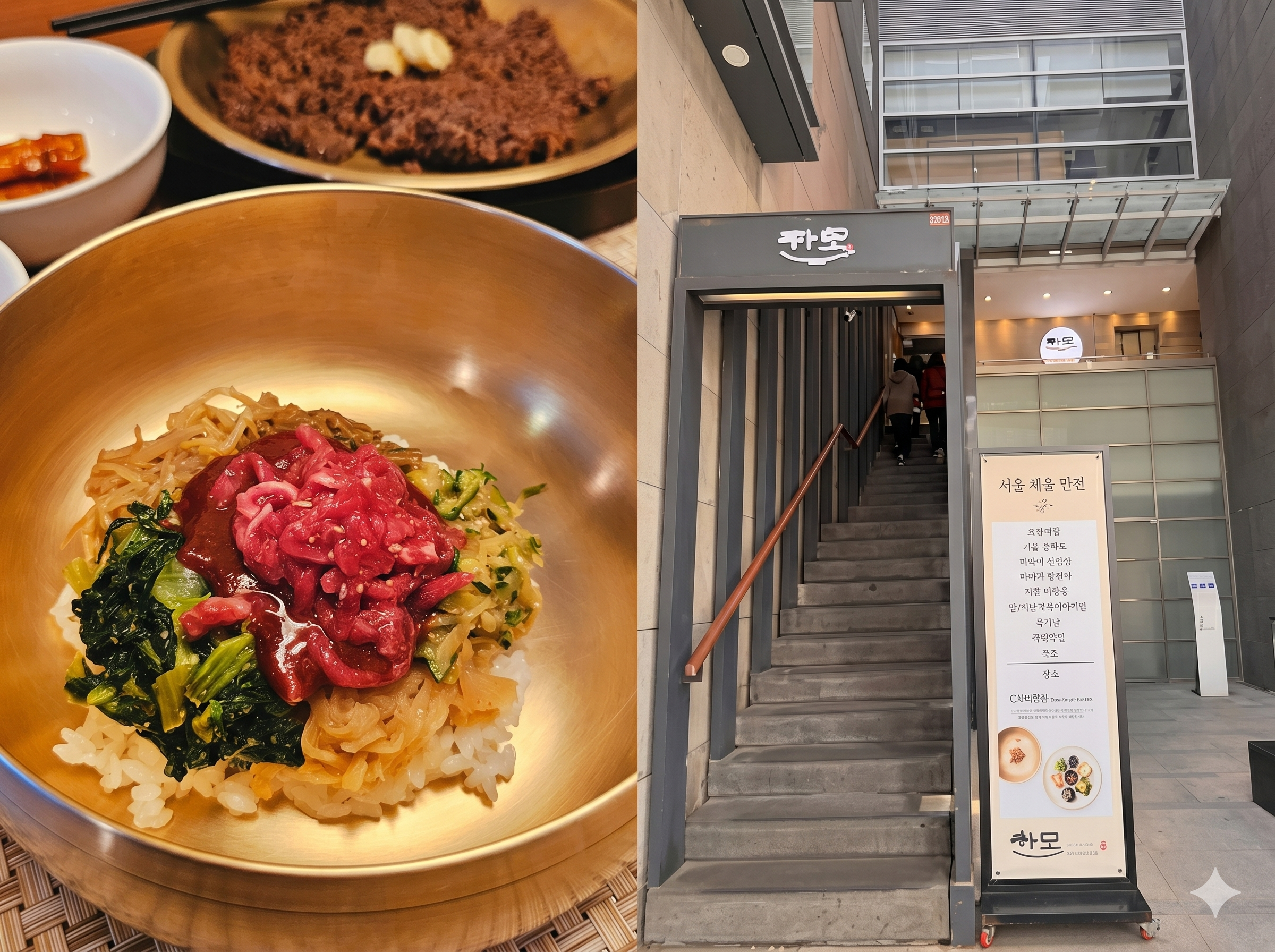
하모 (Hamo)
Hamo · Apgujeong · Michelin 1-Star
The Jinju approach, Seoul address, Michelin rating. Hamo serves yukhoe bibimbap in the Jinju tradition — soy-based, not gochujang, raw marinated beef finely sliced, seasonal vegetables. The bowl arrives composed; you mix it yourself. Reservation required, usually weeks in advance. This is the version of bibimbap that makes you understand why some bowls carry a star.
진주비빔밥 스타일을 서울 압구정에서, 미쉐린 1스타로 맛보는 곳입니다. 고추장 대신 간장 베이스, 얇게 썬 육회, 계절 나물. 예약 필수입니다.
진주회관
Jinjuhoeigwan · Seochon
콩나물비빔밥. A Seochon neighborhood institution. Bean sprout bibimbap with a clear broth on the side. Locals eat here for lunch. No frills, very good.
서촌 골목에서 콩나물비빔밥 한 그릇. 동네 사람들이 점심으로 먹는 집입니다.
두레유
Dureyu · Samcheongdong
Seoul's go-to for plant-based Korean food. The bibimbap is fully vegan — no egg, no meat — and one of the most complete bowls on the menu. Samcheongdong location.
삼청동 비건 한식당. 달걀도 고기도 없는 완전 채식 비빔밥입니다. 한국 채식 음식이 궁금한 분께 첫 번째 추천입니다.
Bibimbap Without Leaving Your Room
편의점 장보기 한 번이면 됩니다
Korea's convenience stores (CU, GS25, 7-Eleven) stock everything you need for a perfectly decent bibimbap without a kitchen. This isn't a compromise — it's what plenty of Koreans eat on weeknights.
한국 편의점에서 비빔밥 밀키트와 햇반을 사서 숙소 전자레인지에 데우면 됩니다. 여행 피로가 쌓인 날 밤, 가장 현실적인 선택입니다.
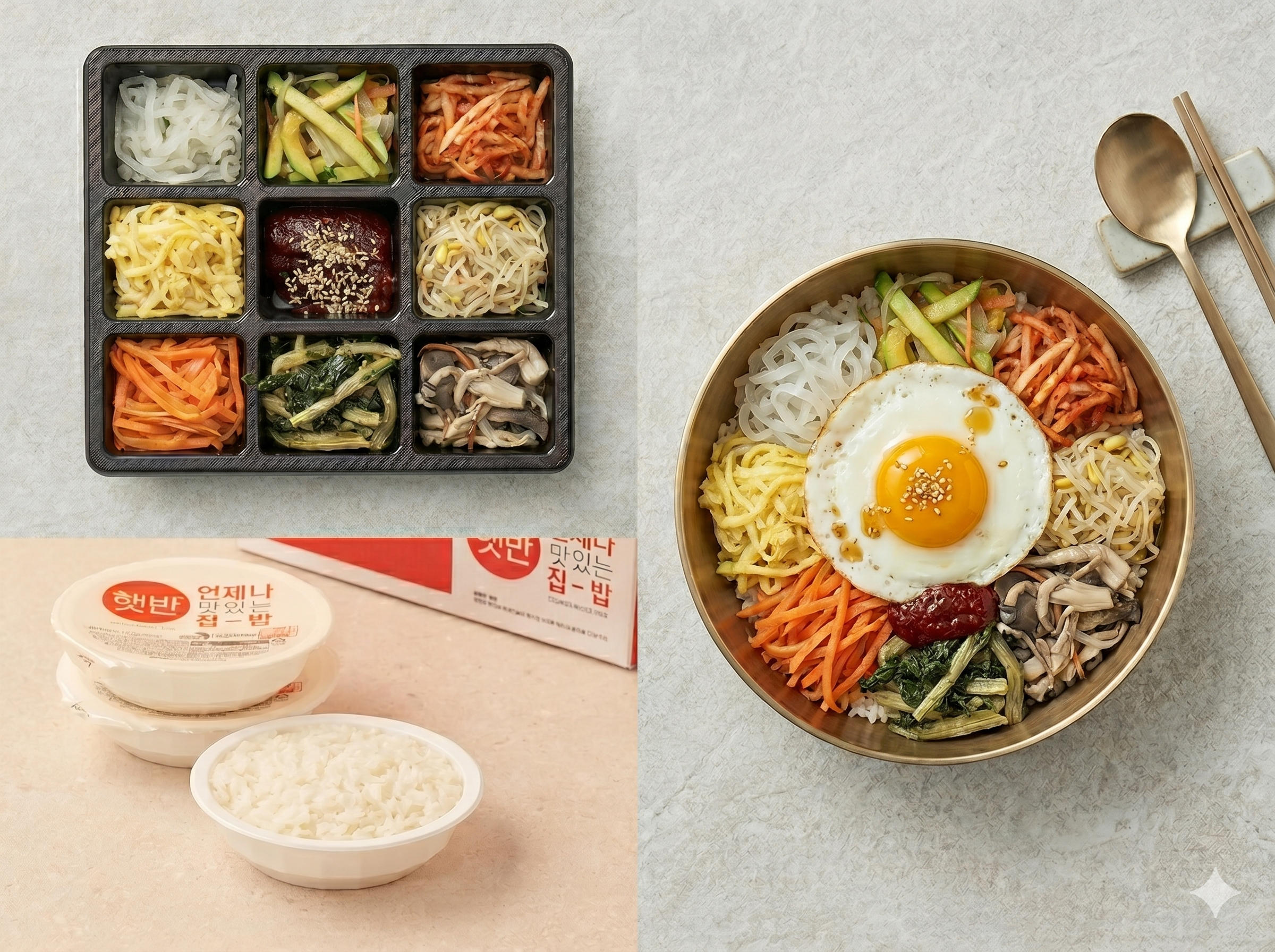
Thirty garnishes is the restaurant version. At home, five works. The trick is cooking the vegetables efficiently — steaming or microwaving them all at once instead of individually stir-frying. Korean homemakers have turned this into an art form.
집에서 30가지 나물을 볶을 필요 없습니다. 5가지로도 충분합니다. 핵심은 나물을 한꺼번에 처리하는 방법입니다. 전자레인지나 찜기를 이용하면 시간이 훨씬 줄어듭니다.
초간단 비빔밥 — Two Methods
⭐ Easy · 15–20 min · Serves 1–2
Method A — 전자레인지 (Microwave)
- 1 Wash vegetables (spinach, bean sprouts, zucchini, carrot). Leave some water on them — this creates steam. 야채를 씻은 후 물기를 완전히 제거하지 않는다 (수분이 김을 만든다)
- 2 Place all vegetables in a microwave-safe bowl. Cover with a lid or plastic wrap with a small gap. Microwave 3–4 min on high. 전자레인지용 용기에 야채 모두 넣고 뚜껑을 살짝 열어 3~4분 고열로 찐다
- 3 Season each vegetable separately with sesame oil, garlic, salt. (30 seconds each.) 야채별로 참기름, 다진 마늘, 소금으로 간을 한다 (각 30초씩)
- 4 Place cooked rice in a bowl. Arrange vegetables on top. Add an egg (fried or raw). Add gochujang. 밥 위에 나물 올리고 달걀 (후라이 or 날달걀)과 고추장 추가
- 5 Mix everything. Add a drizzle of sesame oil. Done. 비비고 참기름 한 바퀴. 완성.
Method B — 찜기 (Steamer)
- 1 Add a piece of dried kelp (다시마) and dried shrimp (건새우) to the steamer water. This infuses subtle umami into the vegetables as they cook. 찜기 물에 다시마와 건새우를 넣는다 — 나물에 은은한 감칠맛이 배인다
- 2 Arrange different vegetables around the steamer tray. Place a small bowl with one egg in the center. 찜기에 야채를 종류별로 둘러 담고 가운데 종지에 달걀을 올린다
- 3 Steam on high for 10 minutes. All vegetables and egg cook simultaneously. 강불에 10분 쪄준다. 나물과 달걀이 동시에 완성된다.
- 4 Season with sesame oil, garlic, salt. Arrange on rice. Add gochujang or soy sauce. 참기름, 마늘, 소금으로 간하고 밥 위에 얹는다. 고추장 or 간장 선택.
비건이라면 달걀 없이, 고추장 대신 간장 양념으로. 기본 나물 비빔밥은 완전 채식입니다.
▶ Recipe Videos
6-Minute Microwave Bibimbap
YouTube · Quick Korean — English, beginner-friendly
냄비 하나로 초간단 비빔밥 만들기
YouTube · 한국어 · 나물 한꺼번에 삶기
Bibimbap — The Complete Version (Maangchi)
maangchi.com · The most trusted English-language Korean cooking guide · Full traditional method
Pronunciation Guide
"비빔밥" = Bi-bim-bap
Bi as in "bee" · Bim rhymes with "him" · Bap rhymes with "top" (Korean short vowel). Say it fast, one breath. If the server smiles, you got it.
Share Your Bowl
비빔밥 시리즈 · Bibimbap Series