라면 · Ramyeon — 봉지 뒷면에 다 적혀 있다
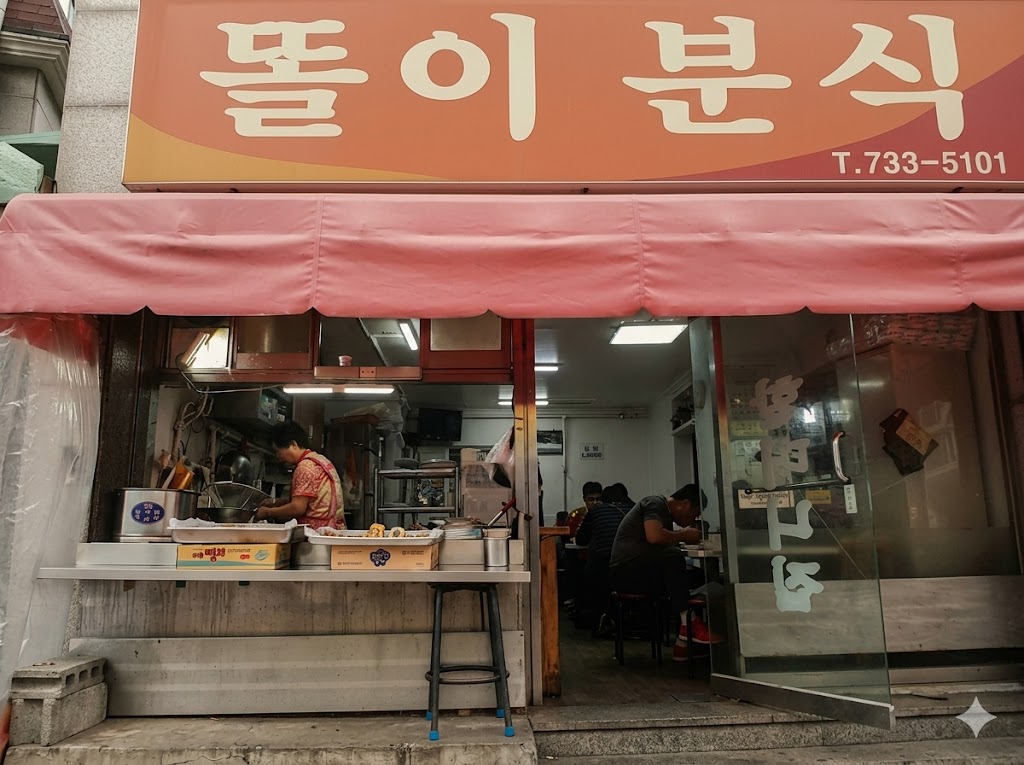
한국 최초의 라면, 삼양라면 · 1963
라면은 일본에서 왔습니다. 정확히는 — 1963년, 삼양식품이 일본 닛신에서 제조 기술을 배워와 한국 최초의 라면을 출시했습니다. 당시 한국은 보릿고개를 막 넘기던 시절이었습니다. 싸고, 빠르고, 배부른 음식이 필요했습니다. 라면은 그 자리를 정확하게 채웠습니다.
그런데 한국은 라면을 그냥 받아들이지 않았습니다. 개조했습니다. 일본 라멘의 진한 동물성 육수 대신, 멸치와 고추의 빨간 국물을 넣었습니다. 면은 더 쫄깃하게. 지금 신라면 한 봉지와 일본 라멘 한 그릇을 나란히 놓으면 — 사촌이라고 부르기도 민망할 만큼 다른 음식이 됐습니다.
오늘날 한국 라면은 단순한 인스턴트 식품이 아닙니다. 시험 끝나고 혼자 끓여 먹던 라면, 군대에서 전우와 나눠 먹던 라면, 늦은 밤 술 한잔 후 편의점에서 먹던 라면. 한국인에게 라면은 추억의 레이어가 켜켜이 쌓인 음식입니다. 한국에서 한 해 팔리는 라면은 약 40억 개 — 1인당 연간 77개 꼴입니다.
Ramyeon came from Japan. Sort of. In 1963, Samyang Foods brought the technology over from Nissin and launched Korea's first instant noodle. Korea was emerging from serious food scarcity. Something cheap, fast, and filling was needed. Ramyeon stepped in.
But Korea didn't just adopt the format. It rebuilt it. The rich animal-based broths of Japanese ramen were replaced with spicy, anchovy-based red broths. The noodles went chewier. Now set a packet of Shin Ramyeon next to a bowl of Japanese ramen and you'd struggle to call them cousins.
Today, ramyeon isn't just instant noodles. It's the bowl you made alone after an exam, the pack you shared in the army, the thing you ate standing outside a convenience store at 2am. Korea eats around 4 billion servings of ramyeon a year — roughly 77 per person. One of the highest consumption rates on the planet.
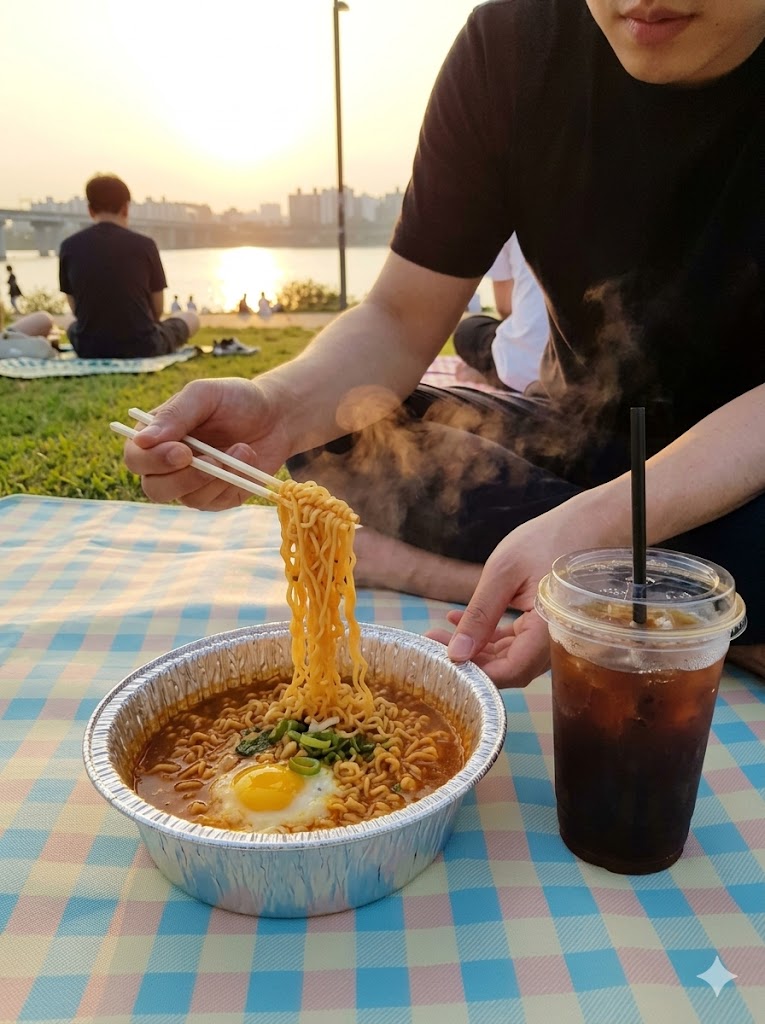
한강공원 · Seoul
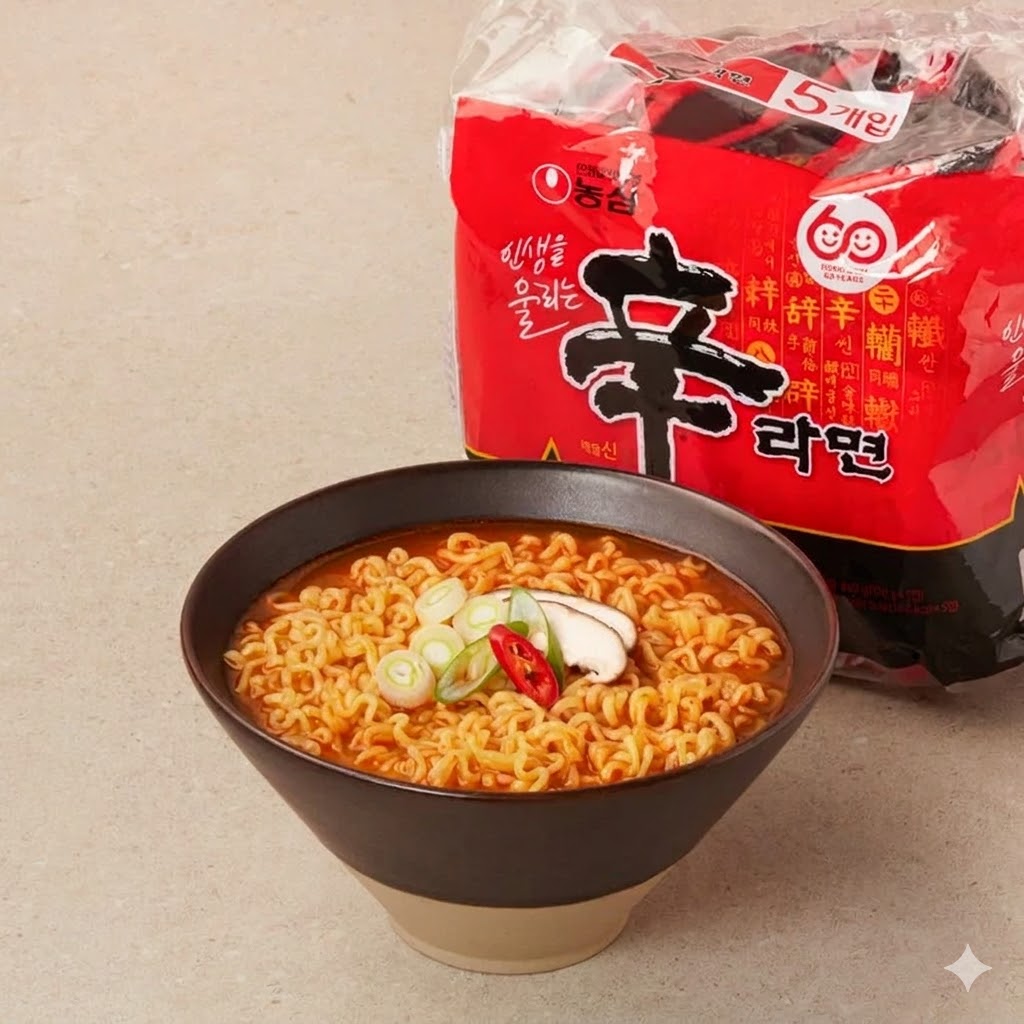 신라면
신라면
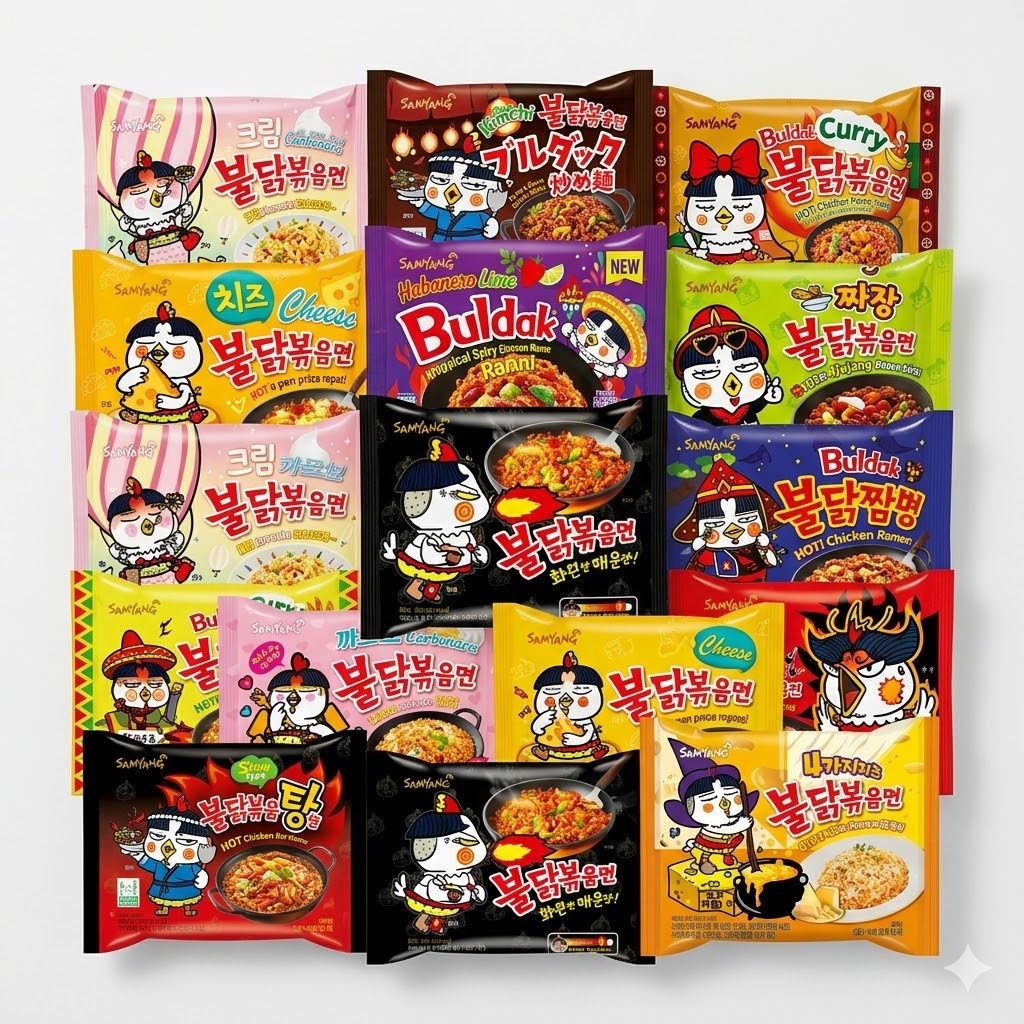 불닭 시리즈
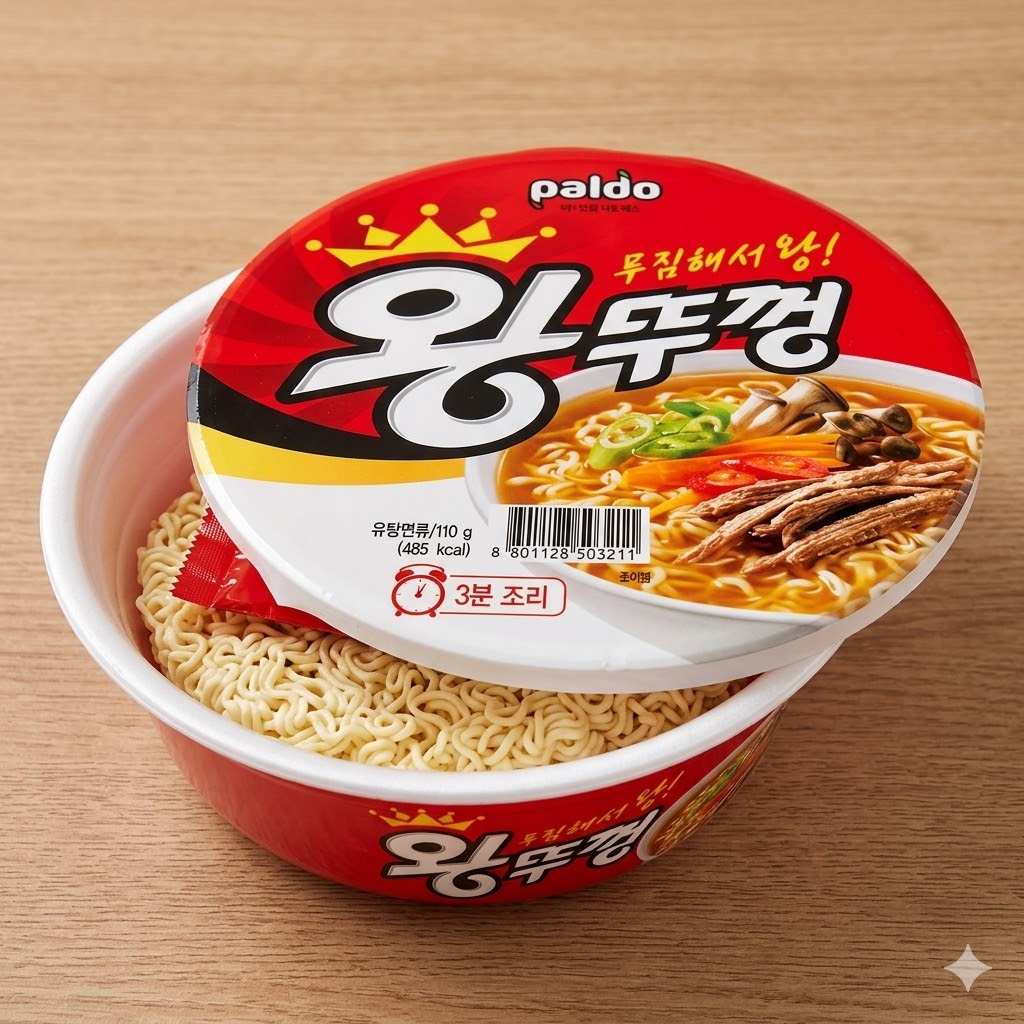 왕뚜껑
왕뚜껑
대한민국 라면 삼대장 · Korea's Ramyeon Icons
| 라면 1봉지 · Ramyeon packet | 면 + 스프 포함 / noodles + soup powder |
| 물 · Water | 550ml |
| 계란 · Egg | 1개, 선택 / 1 ea, optional |
| 파 · Green onion | 약간, 선택 / optional |
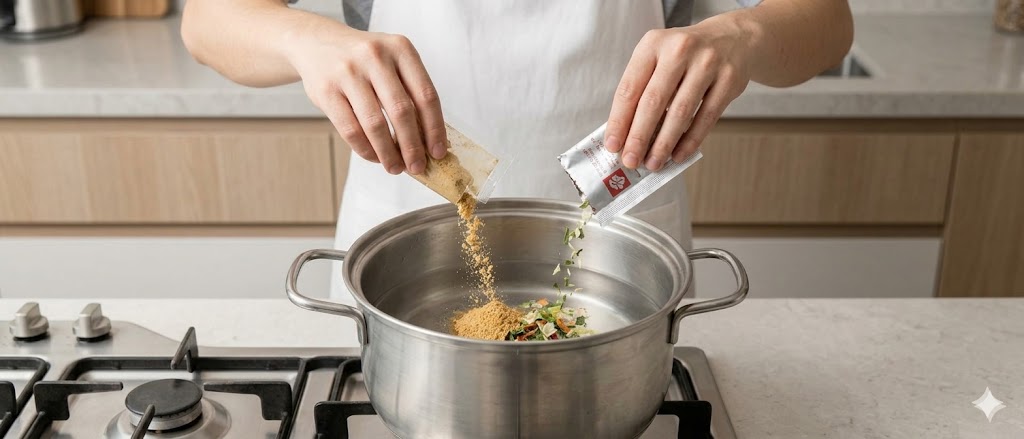
스프 먼저 · Powder goes in first
Bring 550ml of water to a full boil.
Add the soup powder first — before the noodles. This is the correct order.
Add the noodles and cook for the time printed on the packet. Usually 4 min 30 sec.
Drop the egg in 1 minute after the noodles for a soft yolk.
Done. There is no secret.
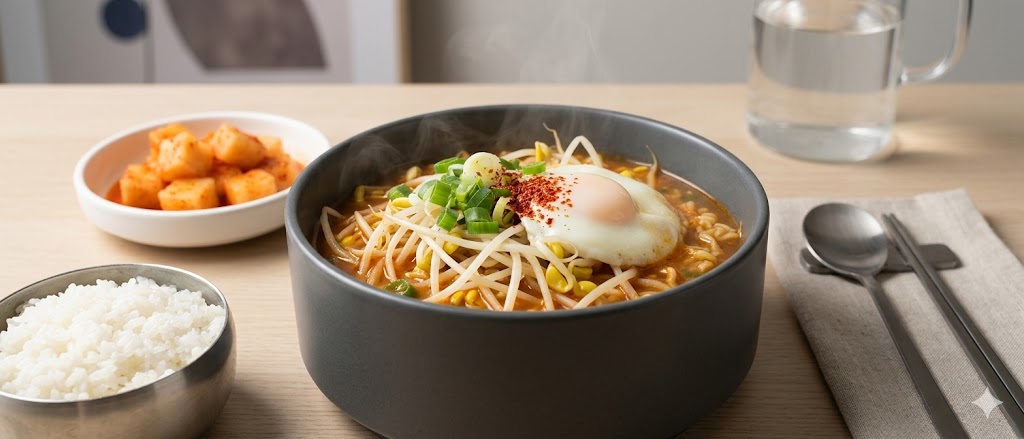
완성 · 계란 반숙, 파 올려서
Pull it 30 seconds early. Noodles stay chewy, broth hasn't fully soaked in.
Cook an extra minute. Broth soaks deep into the noodle. More Koreans prefer this than you'd expect.
라면 다 먹고 국물 남기지 마세요. 밥 한 공기 + 참기름 한 방울 + 김 한 장. 라면 국물 볶음밥 완성. 한국인의 가장 비밀스러운 엔딩입니다.
Don't discard the broth. Add leftover rice, sesame oil, dried seaweed. The most secretive and most delicious ending.
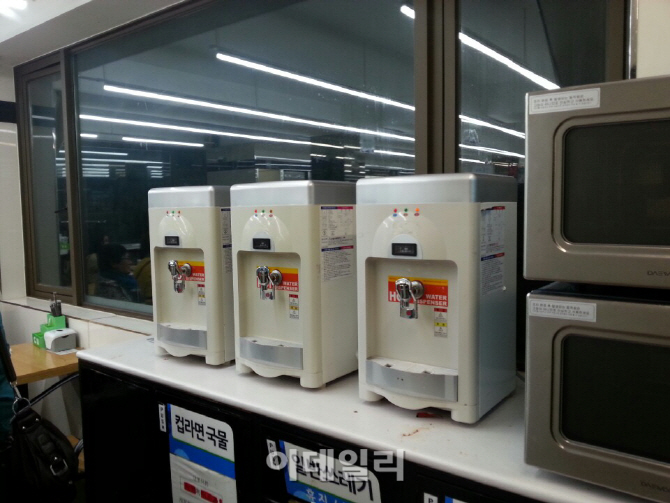
Every convenience store has a hot water dispenser. Pick your cup ramyeon, pour the water, wait 3–4 minutes. That's it. Choosing from 500+ varieties is half the fun.
The convenience stores at Han River Park have machines that actually cook bag ramyeon for you. Buy a packet, put it in the machine, it boils it with hot water. Take it to the grass, sit down. This specific experience exists nowhere else.
Any bunsikjip — Barada Kimbap, Gobongmin, or unnamed neighborhood spots — always has ramyeon on the menu. The broth here tastes slightly different. The reason is unclear. The result is not.
Specialist spicy ramyeon chain. Measurably hotter than Shin Ramyeon. Koreans sweat here. For those who need a benchmark.
A retro tea-room cafe in Mapo that serves ramyeon. Photogenic space meets instant noodle. Shouldn't work. Does.
The morning after a night out, ramyeon is one of Korea's standard moves. Add bean sprouts to the broth — it turns light and clean. Bean sprouts contain aspartic acid, said to help metabolize alcohol. Or maybe it just tastes right. Either way, it works.