설렁탕 · 곰탕 · 돼지국밥
Korea's Three Bone Soups
뼈와 시간과 가마솥 · Bones, Time & the Iron Cauldron
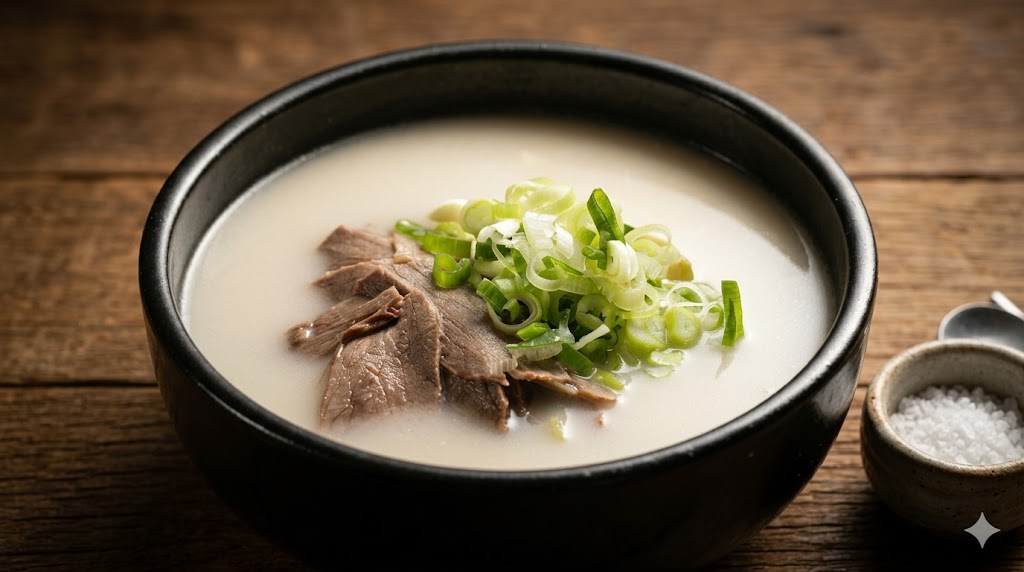
설렁탕 — 소금·파로 직접 간하는 뿌연 사골 국물
"A bowl of pale broth. No sauce, no garnish, no drama. The New York Times called it 'the kind of soup you could eat every day.' — Seolleongtang, Gomtang, Dwaeji Gukbap."
아무 간도 안 된 하얀 국물 한 그릇. 뉴욕타임스가 "매일 먹고 싶은 요리"라고 불렀습니다. — 설렁탕, 곰탕, 돼지국밥 이야기.
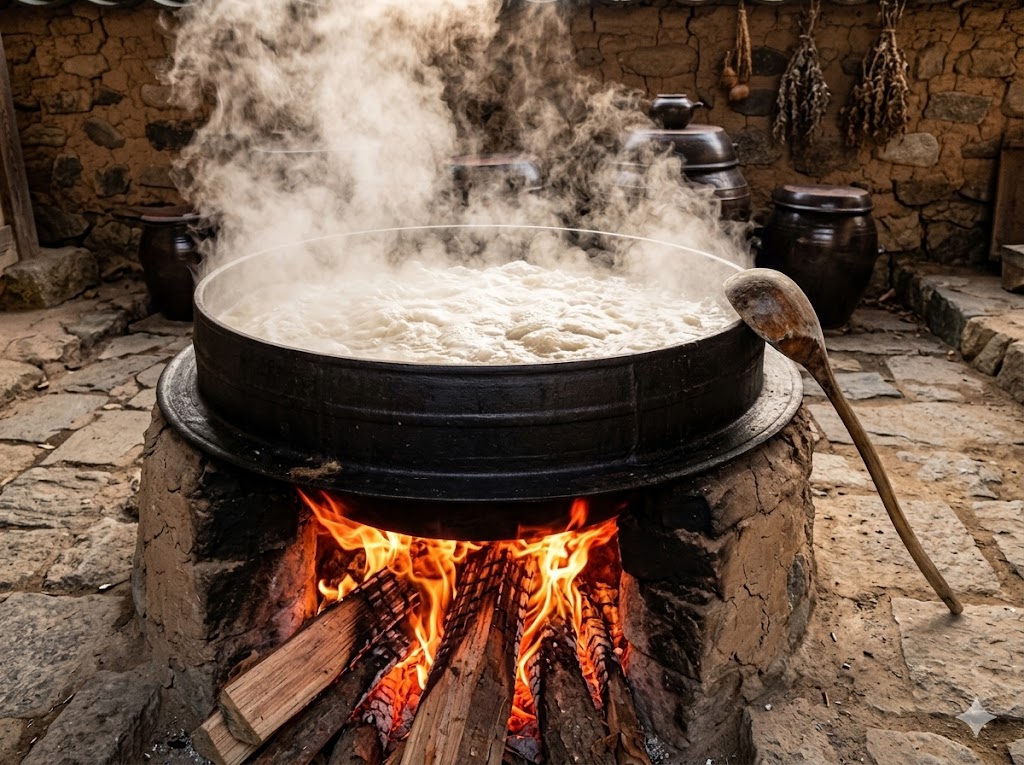
가마솥에서 끓는 설렁탕 — 뼈, 물, 불, 시간
Most people assume Korean food is about the sauce. Gochujang. Doenjang. Garlic. Flavor that arrives loud and stays loud. So when a bowl of pale, unseasoned broth lands on the table — served with kimchi, kkakdugi, and a plate of cold boiled meat on the side — the first instinct is: is that... it?
That instinct is wrong. And its origins are older than most people expect.
Seolleongtang's origin story comes in two versions, and both are worth knowing. The first: in Joseon-era Korea, the king performed the Seonnongjae (선농제), a ritual at the royal altar to pray for a good harvest. When the ceremony ended, the sacrificial ox was thrown into a giant iron cauldron — a gamasot (가마솥) — and boiled over an open flame for the crowds waiting outside. The second theory points to the Mongol invasions of the Goryeo period: seolleongtang may derive from the Mongolian shuru, meaning "meat broth." The Mongols brought slaughter techniques and a whole new relationship with bone to the Korean peninsula.
Gomtang has an even older paper trail — its name comes from the pure Korean verb goda (고다), "to simmer until only the essence remains," recorded in a medical text from 1489. In the market town of Naju, where one of Korea's first five-day markets was held, vendors standing between transactions warmed themselves with a bowl of that long-simmered meat broth. All three soups share the same origin at heart: not aristocratic food, not temple food — food made from bones and scraps, in a single iron cauldron, for people who were hungry and couldn't afford to waste anything.
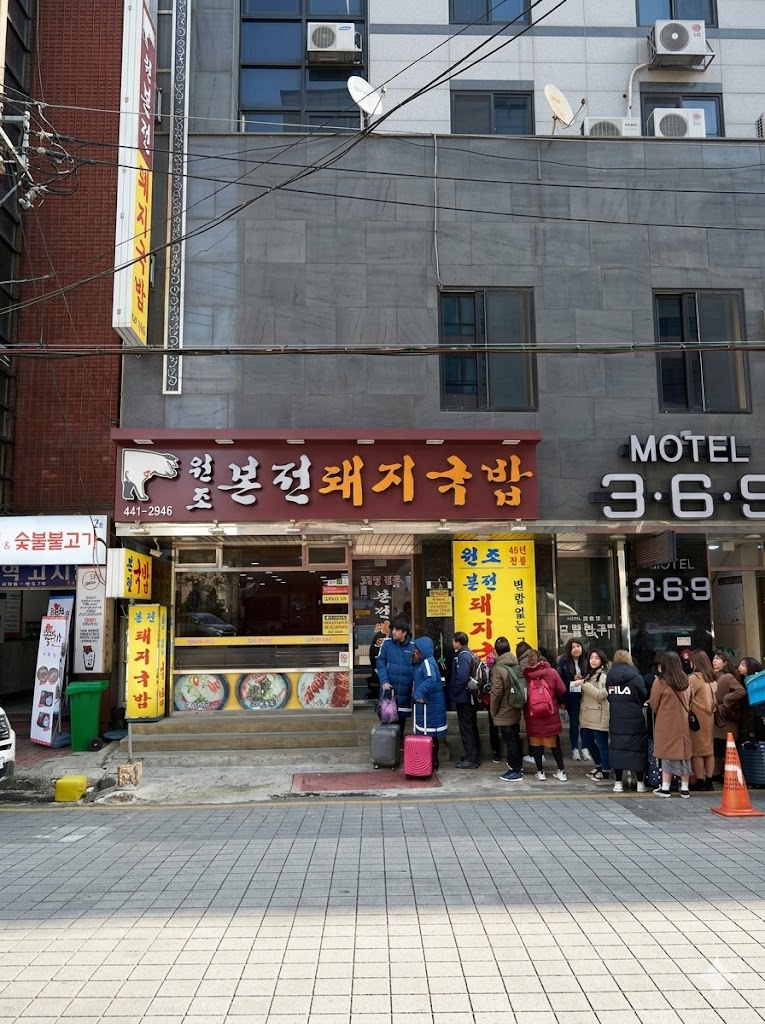
"Some dishes survive because they're good. This one survived because it had to."
Dwaeji gukbap carries the heaviest story. Before the Korean War, Busan was a city of 470,000. Then the North Korean army swept south, capturing 90% of the peninsula within weeks. The Nakdong River line — the last defensive perimeter around Busan — was all that remained of South Korea. If it fell, the country ceased to exist. It didn't fall. But everyone who had fled south was now here: the population surged past one million, eventually hitting 1.2 to 1.3 million. They had to eat. Pork bones were the cheapest thing available. The gamasot stayed lit.
돼지국밥은 가장 무거운 이야기를 갖고 있다. 전쟁 전 부산 인구는 47만 명이었다. 1950년, 북한군이 한반도 90%를 점령하며 낙동강 방어선이 대한민국의 마지막 거점이 됐다. 전국의 피란민이 부산으로 몰렸고, 인구는 100만을 넘겨 최대 130만까지 불어났다. 먹어야 했다. 가장 싼 재료가 돼지 뼈였다. 가마솥은 꺼지지 않았다.
설렁탕의 유래는 두 가지 버전이 있다. 하나는 조선시대 왕이 선농단(先農壇)에서 선농제를 올리고, 제사에 쓴 소를 가마솥에 끓여 백성들에게 나눠줬다는 설. 또 하나는 고려시대 몽골 침략기 유래설이다. 유목민족 몽골인들이 도축 기술과 함께 고기 문화를 전했고, '설렁탕'이라는 이름이 몽골어 '슈루(고기 삶은 물)'에서 왔다는 것이다. 곰탕의 이름은 더 오래됐다. 순우리말 동사 '고다' — 뭉그러지도록 진액만 남을 때까지 푹 끓이다 — 에서 나온 말로, 1489년 문헌에 이미 기록이 있다. 세 가지 탕 모두 뿌리는 같다. 귀한 부위가 아닌 뼈와 자투리 고기로, 가마솥 하나에 불 때워, 배고픈 사람들을 먹인 서민의 음식이다.
이 탕들은 지금도 그 방식대로 먹는다. 국밥 안에도 고기가 충분히 들어있지만, 고기의 온전한 맛을 더 보고 싶다면 수육(수육 — 얇게 썬 삶은 고기)을 추가로 주문하는 걸 추천한다. 국물 없이, 새우젓 한 점 곁들여 먹는 수육은 같은 고기가 전혀 다른 음식처럼 느껴진다. 거기에 식당마다 직접 담근 김치와 깍두기가 반드시 함께 나온다. 이 김치와 깍두기는 그냥 곁들임이 아니다. 구수하고 묵직한 국물과 발효의 산미가 만나는 순간 두 가지 맛이 서로를 완성한다.
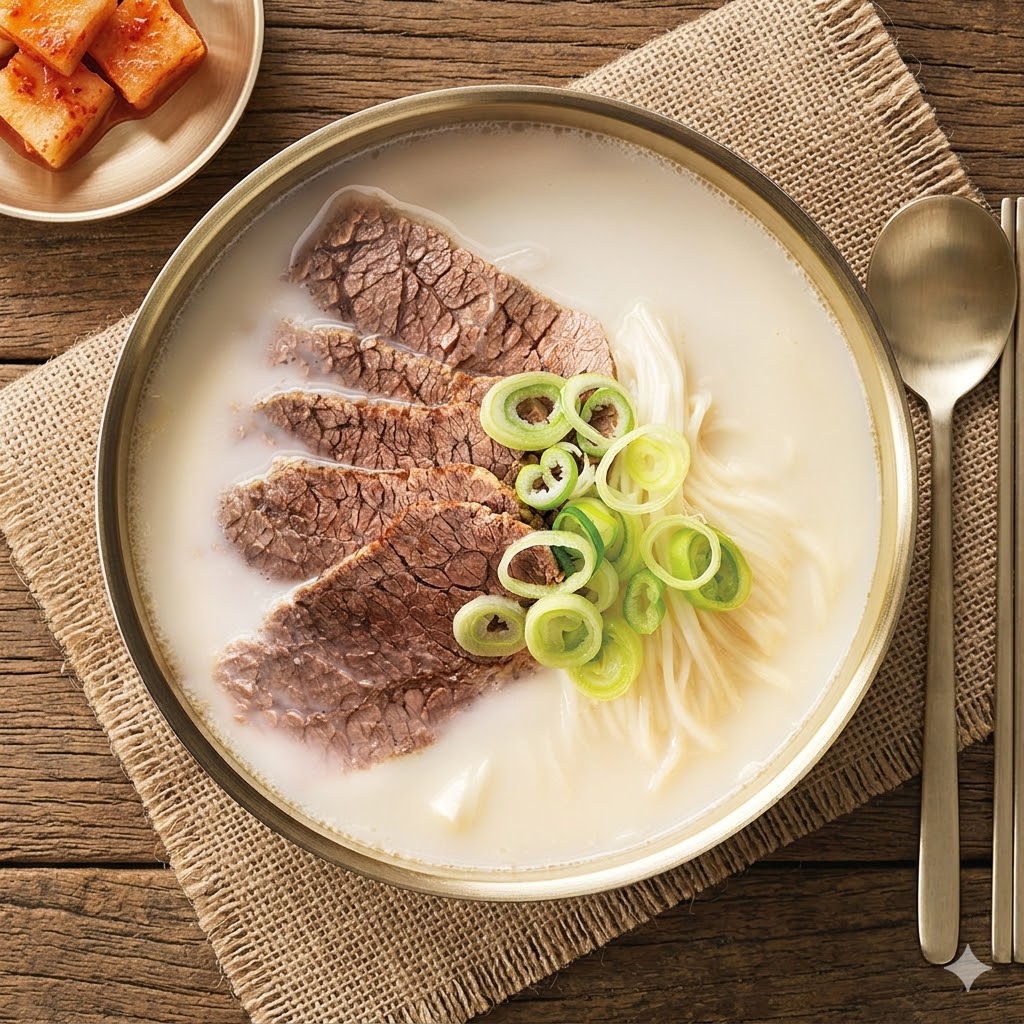
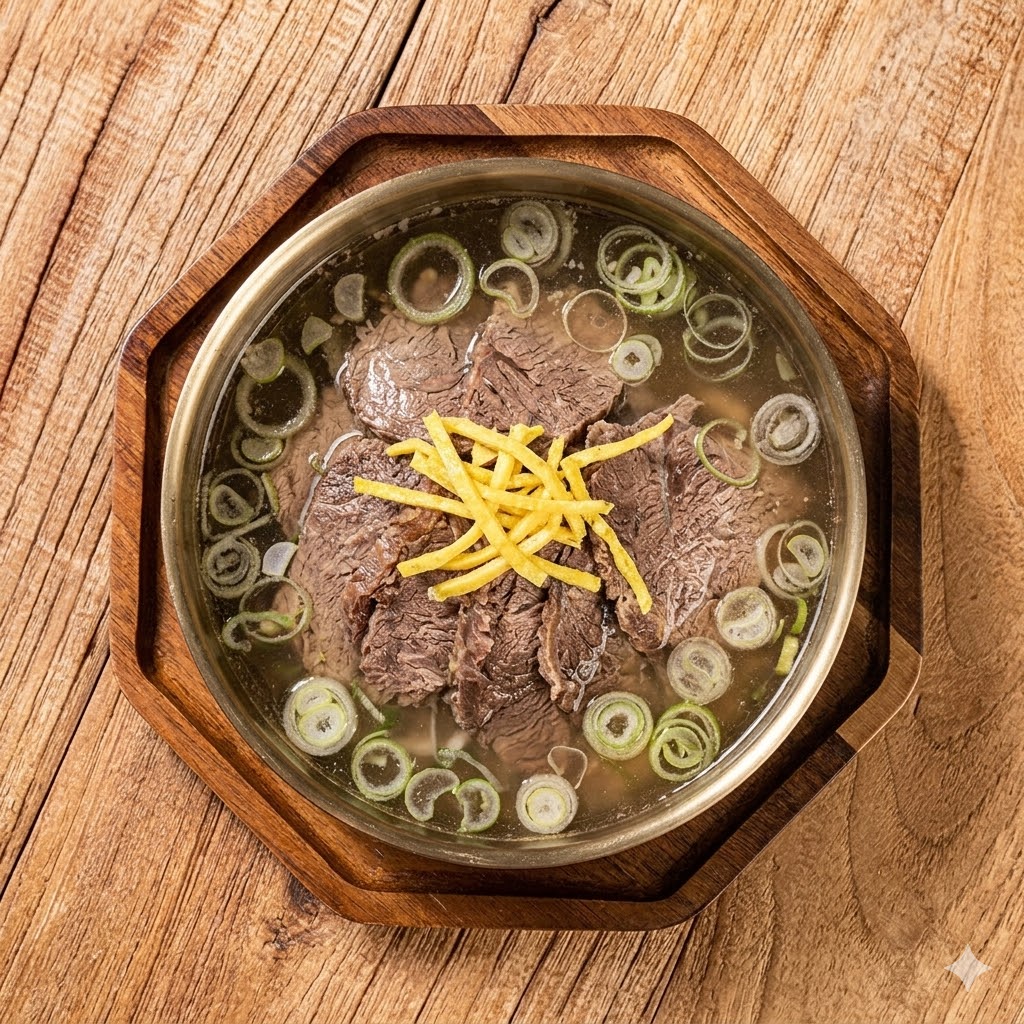
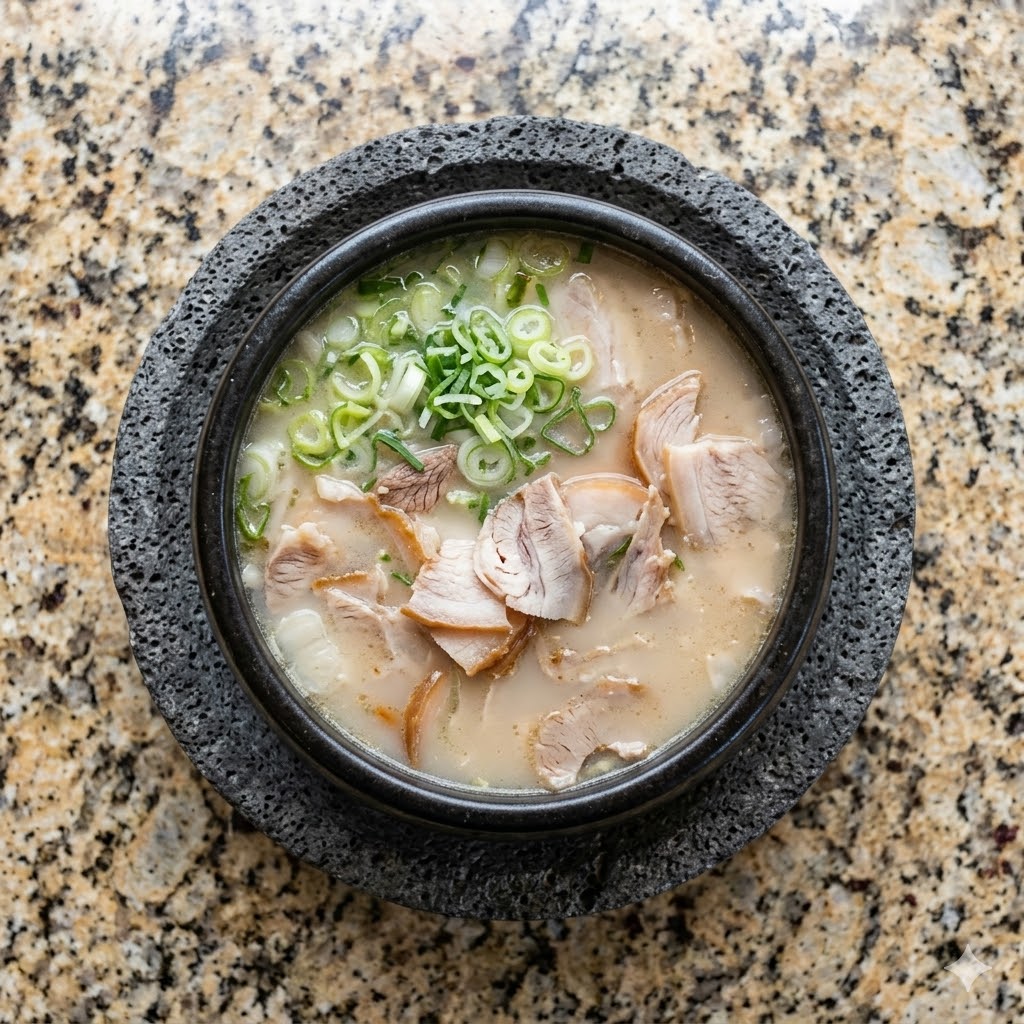
왼쪽부터: 설렁탕 · 곰탕 · 돼지국밥 — 같아 보이지만 철학이 다르다
Seolleongtang's milk-white broth has no milk, no cream, no starch. A giant iron cauldron (gamasot), ox bones, high heat, and time — the fat and collagen emulsify and the broth turns white. Bones. Water. Hours. Done.
설렁탕이 하얀 건 크림이나 유제품 때문이 아니다. 가마솥에 사골을 센 불로 오래 끓이면 뼛속 콜라겐과 지방이 유화되면서 자연스럽게 뿌옇게 변한다. 재료는 뼈, 물, 가마솥, 시간뿐이다.
Three bowls that look nearly identical. Seolleongtang is milky bone broth (beef), gomtang is a clear meat-based broth (brisket), and dwaeji gukbap is pork all the way. None come pre-seasoned. You do that part — and it matters.
세 그릇을 나란히 놓으면 비슷해 보이지만 철학이 다르다. 설렁탕 = 뿌연 소뼈 국물 / 곰탕 = 맑은 양지 국물 / 돼지국밥 = 돼지뼈 국물. 셋 다 간을 직접 해야 한다는 건 이 탕의 방식이다.
Vietnamese pho, Japanese tonkotsu, French pot-au-feu, Mexican caldo de res — every food culture figured out bone broth. But only tonkotsu and seolleongtang go white. The reason: high, sustained heat drives collagen into emulsion. Everyone else was chasing clarity. Korea cranked the flame.
베트남 포, 일본 돈코츠, 프랑스 포토푀, 멕시코 칼도 데 레스 — 뼈를 끓여 국물 내는 건 인류 공통의 본능이다. 그런데 국물이 하얗게 변하는 건 설렁탕과 돈코츠뿐이다. 이유는 불 세기. 한국은 세게 끓이는 쪽을 선택했다.
In 2023, New York Times critic Pete Wells gave two stars to Okdongsik — a Seoul pork gomtang specialist — and wrote: "the kind of soup you could eat every day." Same year: NYT Best Dishes of 2023, 8th place. Unseasoned pork bone broth. Best dishes. 2023.
2023년 뉴욕타임스 Pete Wells는 뉴욕의 돼지 곰탕 전문점 옥동식에 별 2개를 줬다. 한 줄 평: "매일 먹을 수 있는 국물." 같은 해 NYT 올해의 베스트 요리 8위. 아무 양념도 없는 돼지 뼈 국물이.
Before the Korean War, Busan had 470,000 people. By 1951, it hit 1.3 million — refugees from across the country, compressed into a city not built for them. Pork bones were the cheapest protein available. The cauldron stayed lit. Today Busan has over 1,000 dwaeji gukbap restaurants.
전쟁 전 부산 인구는 47만 명. 낙동강 방어선이 마지막 거점이 된 순간 전국의 피란민이 몰려 130만 명까지 불어났다. 돼지 뼈가 가장 싼 단백질이었다. 지금 부산엔 돼지국밥 집이 1,000곳이 넘는다. 어떤 음식은 맛이 좋아서 살아남는다. 이 음식은 살아야 해서 살아남았다.
The bowl already has plenty of meat. But if you want to taste the pork or beef on its own terms — without the broth, with just a dab of salted shrimp paste — order suyuk (수육) on the side. And the house kimchi and kkakdugi aren't optional. That fermented sharpness is the other half of the bowl.
국밥 안에도 고기가 충분히 들어있다. 고기의 온전한 맛을 더 보고 싶다면 수육을 추가로 주문할 것. 새우젓 한 점 곁들여 먹는 수육은 같은 고기가 전혀 다른 음식처럼 느껴진다. 김치·깍두기는 선택이 아니다. 국물과 발효의 산미가 만나는 순간 두 가지 맛이 서로를 완성한다.
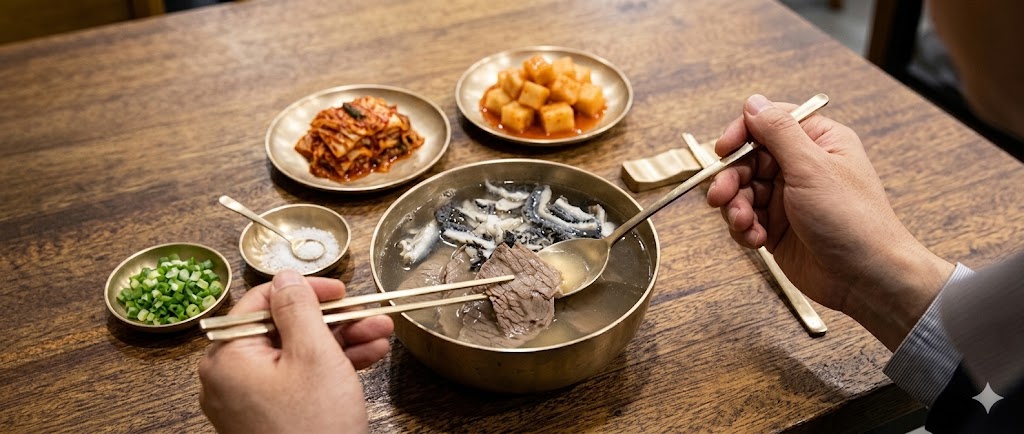
국밥 한 그릇 + 수육 + 집 김치·깍두기 + 새우젓 — 이게 완성된 한 상이다
The soup comes with a generous amount of meat already in the bowl — you won't leave hungry. But if you want to taste the meat on its own terms, order suyuk (수육, boiled meat slices) on the side. It's the same cut, cooked the same way, just served without the broth. The house kimchi and kkakdugi on every table are made in-house — every restaurant has its own recipe, and that fermented sharpness is what pulls the whole bowl together. Don't skip it.
국밥 안에는 고기가 충분히 들어있다. 다만 고기의 온전한 맛을 더 보고 싶다면 수육을 추가로 주문해볼 것. 국물 밖으로 꺼낸 고기는 전혀 다른 식감과 풍미로 다가온다. 테이블에 반드시 나오는 집 김치·깍두기는 식당마다 직접 담근 레시피가 다르고, 이것들 없이는 절반만 먹은 거다.
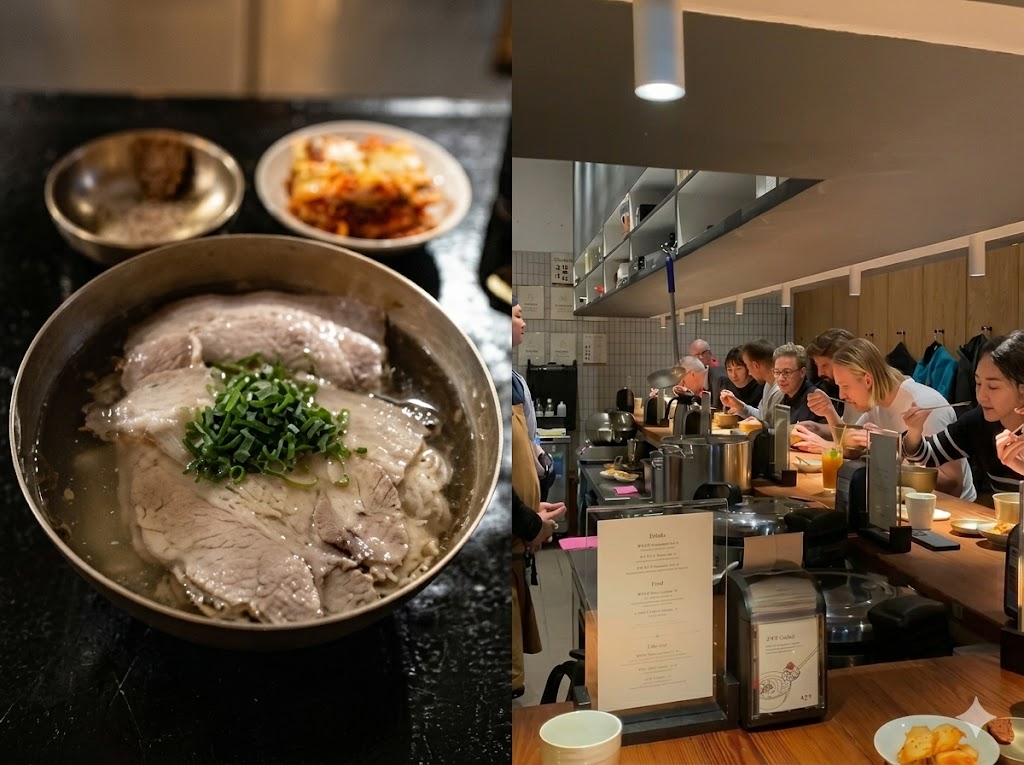
Started in Seoul with one rule: 100 bowls a day, nothing more. Arrived in New York as a pop-up in 2022 and never left. The broth is made exclusively from the front and hind legs of Jeju black pork — clear, clean, and deeper than it looks. Pete Wells gave it two NYT stars and called it "the kind of soup you could eat every day." Chef also appeared on Korea's viral Culinary Class Wars. English menu available. ₩₩
서울에서 하루 100그릇 원칙으로 시작한 돼지 곰탕 전문점. 2022년 팝업으로 뉴욕 데뷔 후 정식 매장 2곳 운영. 제주 흑돼지 앞다리·뒷다리만 써서 뽑은 국물. NYT Pete Wells 별 2개 + 2023 올해의 베스트 요리 8위. Culinary Class Wars 출연 셰프. ₩₩
The Seoul landing of Busan's Michelin-recognised pork gukbap. Female pigs only (amtweji), simmered 24+ hours — rich but remarkably clean on the palate. Seoul-exclusive eonjeong galbigukbap is worth trying. Gangnam-gu, Eonju-ro 520 1F (Yeoksam·Seolleung). Mon–Fri 11:00–midnight, Sat–Sun 9:00–21:00. ₩₩
부산 광안리 미슐랭 빕 그루망 안목의 서울 강남 지점. 암퇘지 사골을 24시간 이상 끓인 진하고 깔끔한 국물. 서울점 한정 엉정 갈비국밥도 있다. 강남구 언주로 520 1층 (역삼·선릉역). ₩₩
Same broth philosophy as Gangnam, planted in Seongsu — where old factory aesthetic meets new Seoul energy. Daily 10:00–22:00. ₩₩
강남점과 동일한 국물 철학, 성수동 감성에 맞게 자리 잡은 두 번째 서울 지점. 매일 10:00~22:00. ₩₩
Straightforward Busan-style pork gukbap in the heart of Gangnam's office district — and it runs 24 hours. The go-to for post-dinner recovery or a late-night bowl when everything else is closed. Gangnam-gu, Nonhyeon-ro 85-gil (Yeoksam Station exits 2–3). ₩
강남 한복판에서 24시간 먹을 수 있는 부산식 돼지국밥. 회식 후 해장, 늦은 밤 한 끼. 강남구 논현로85길 (역삼역 2~3번 출구). ₩
Chef Lim Jung-sik — of Michelin two-star Jungsik New York — turned his attention to gomtang and made it fine dining. Ox feet, tendons, and oxtail simmered 10+ hours. The broth coats your lips. Twenty bowls a day. If sold out, come back tomorrow. ₩₩₩
뉴욕 Jungsik의 임정식 셰프가 만든 파인다이닝형 곰탕 전문점. 소 발·힘줄·꼬리를 10시간 이상 끓인 콜라겐 국물. 하루 20그릇 한정. ₩₩₩
Same-day-slaughtered Hanwoo beef in the broth, topped with a mountain of minari (water dropwort) grown in clean spring water. The visual — bright green herbs piled high over pale broth — earns the photo. ₩₩
당일 도축 한우 국물에 청정수 미나리를 수북이 올려 내는 현대식 곰탕. 초록 미나리가 산처럼 쌓인 비주얼로 SNS 화제. ₩₩
The reference point for traditional Busan pork gukbap. The kitchen uses tolyeom — repeatedly ladling hot broth over the meat to cook it gently — which removes off-notes and locks in the pork's clean, rounded flavour. The broth is clear, almost like a galbitang, and the kind that lingers long after you've left Busan. ₩
부산 돼지국밥 정통파의 기준. 고기를 뜨거운 국물에 담갔다 빼는 '토렴' 방식으로 잡내를 잡고, 갈비탕처럼 맑고 깊은 국물을 낸다. 오래된 원칙을 끝까지 고수하는 집. ₩
The first bowl most people eat when they arrive in Busan — and intentionally so. Located near Busan Station, open early. No frills, no surprises, just reliable pork gukbap that's been doing the same thing for decades. The right way to start a Busan trip. ₩
부산역 내리면 현지인들이 가장 먼저 찾는 집. 수십 년 된 노포로 이른 아침부터 영업. 부산 여행의 첫 한 끼. ₩
Where it all started. Female pigs only, simmered 24+ hours — clean, no off-smell, the kind of bowl that converts people who thought they didn't like pork soup. Walking distance from Gwangalli Beach. ₩₩
안목의 시작점. 암퇘지만 써서 24시간 이상 끓인 국물은 냄새 없이 깔끔하다. 돼지국밥을 못 먹던 사람도 여기서 바뀌는 경우가 많다. 광안대교 도보 거리. ₩₩
The no-fail option near Gwangalli Beach. Almost none of the gamey smell that puts first-timers off pork soup. Reliable, unfussy, good view. A solid starting point if you're new to gukbap. ₩
광안리 해변 근처, 호불호 없는 집. 돼지국밥 특유의 잡냄새가 거의 없어 외국인·입문자에게도 추천. 바다 보이는 위치. ₩